Comfort
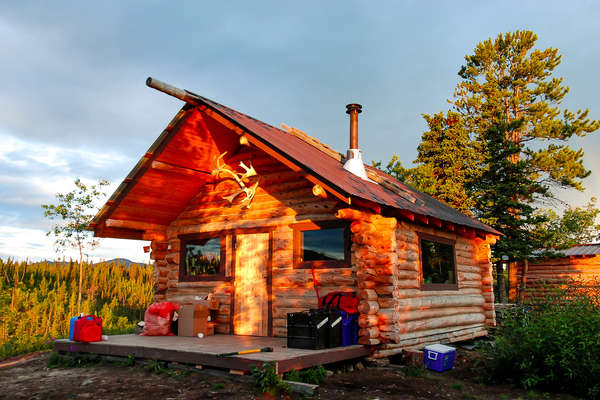
Your base camp is made of small log cabins at 1600m high in the boreal forest (Fish Lake Vaylley). Please note that sleeping arrangements in the cabins are always on a shared basis and may be mixed sex. There is limited electricity supply (via generator only, not 24h). There is no running water but a bucket shower is possible, and a shower on the last day is organised in town.
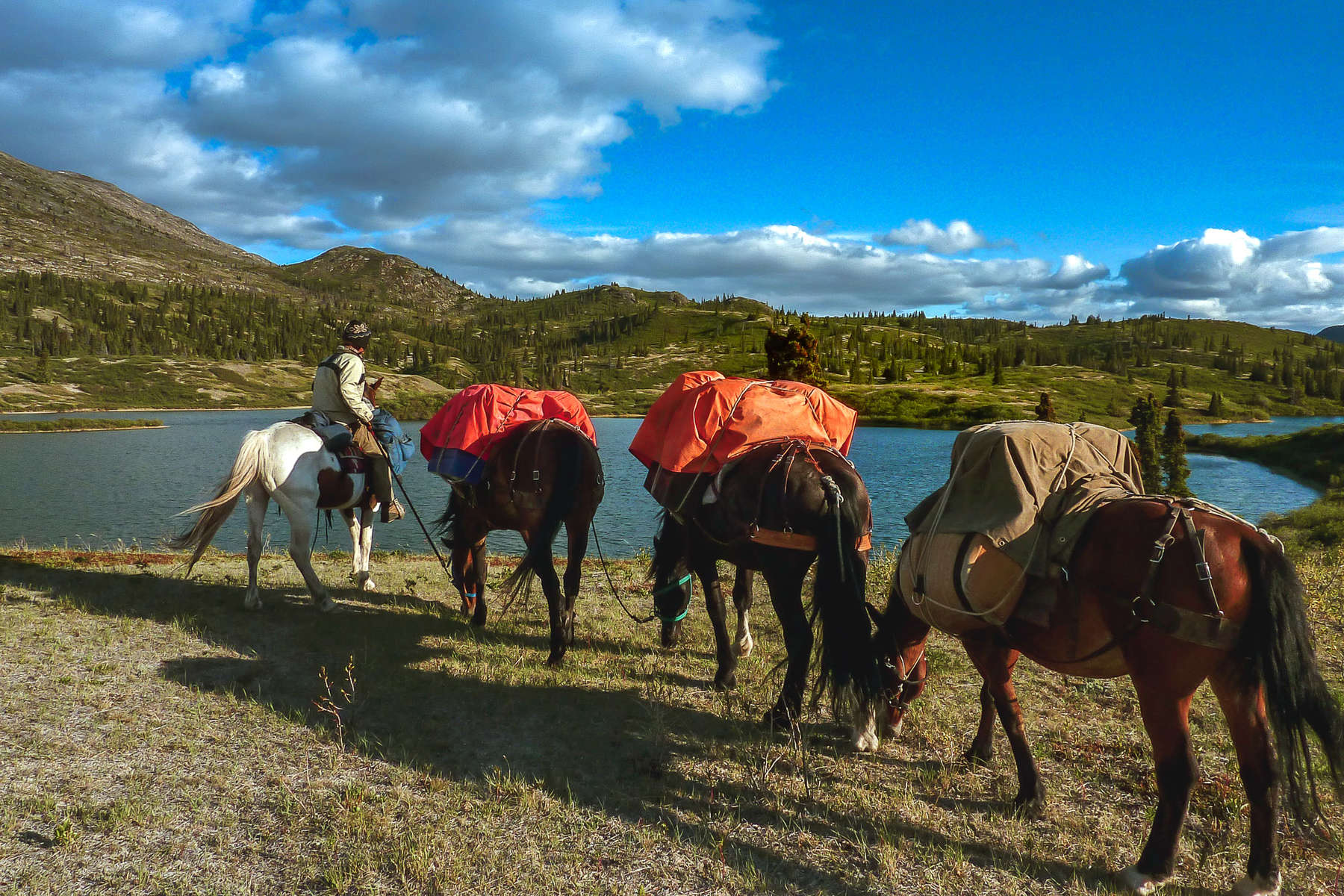
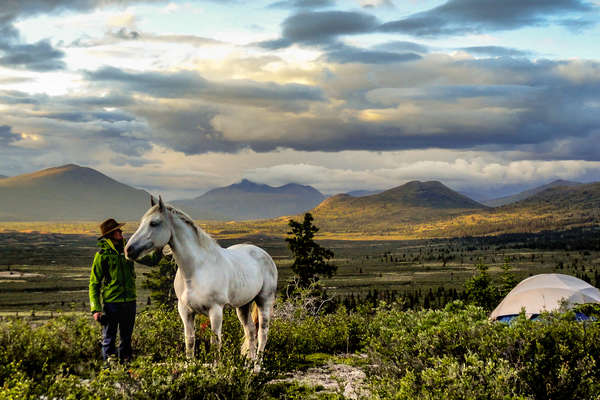
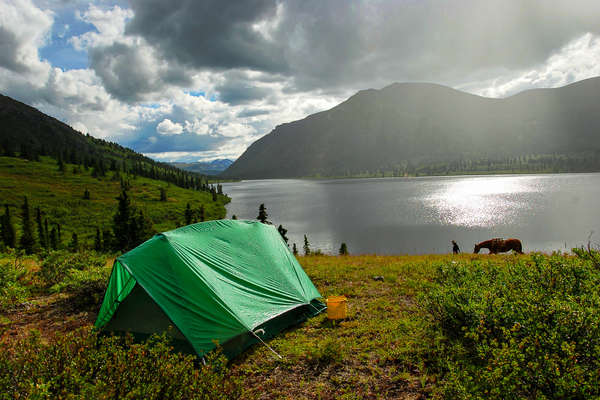
Whilst out on the trail you will camp in two man tents - you need to bring your own sleeping bag and thermarest mattress. (Please note that you can rent a sleeping bag and mattress on-site, see dates and prices)
The base camp at Rose Lake is in fixed tents (2-4 people per tent) with a simple shower setup.
There is no signal on the trail - all communications with the outside world are done via the guide's satellite phone and reserved to emergencies only.
Meals
Expect hearty breakfasts with savory and sweet choices.
Picnic lunches during the trail are cold and consist of cold meat, cheese, bread, dry fruits, chocolate bars.
For dinners hot meal mainly is served as for ex. soup, BBQ meat or fish, pasta, rice, vegetables, salad and desert. Drinking water is provided.
Please ask for special diet. Menu can be adapted.
Alcohol is not included on the trail.
Climate
Yukon is under the midnight sun during the summer three months during which the sun hardly ever sets.
The Yukon has a subarctic semiarid climate. The summers are relatively hot and the winters very cold. In June the days are long and the sun does virtually not lie down at all (midnight sun). In August the days are shorter but still you can enjoy the day up to 21h30. In September and June the nights are cold. The weather is hard to predict in those parts and you should be prepared for major variations during the week (or even during the day!), with cold nights.
Tips
Giving a tip to Pierre and his team is a way of showing your appreciation of the trip and services provided. We would suggest a tip of around CAD$200-250 per person to be split between the team.
In Canada, tipping is expected in all restaurants (except on some snack meals and in self-service restaurants). It is customary to leave 10-15% of the bill as a tip.
Packing list
PLEASE NOTE - The weather in the Yukon is unpredictable and often cold even in the summer. You must come prepared with suitable gear and quality outdoor clothing/sleeping bags.
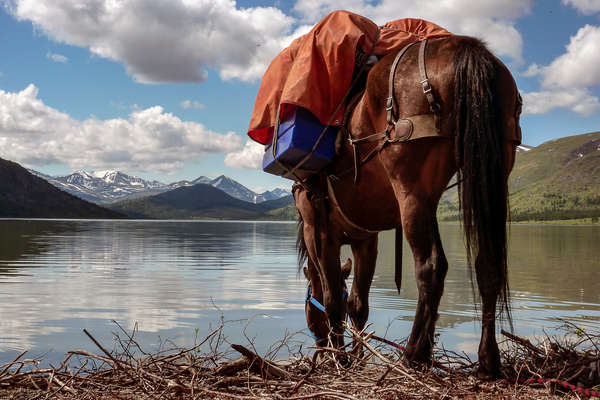
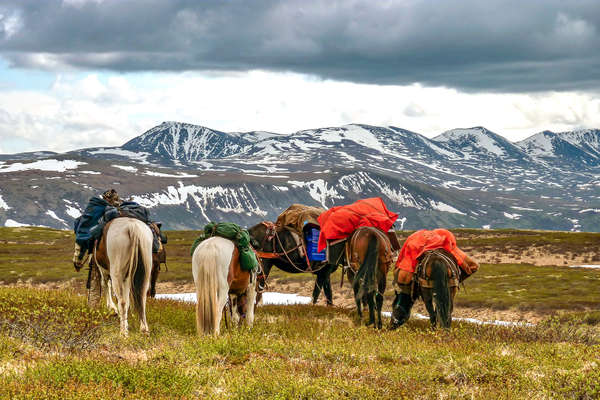
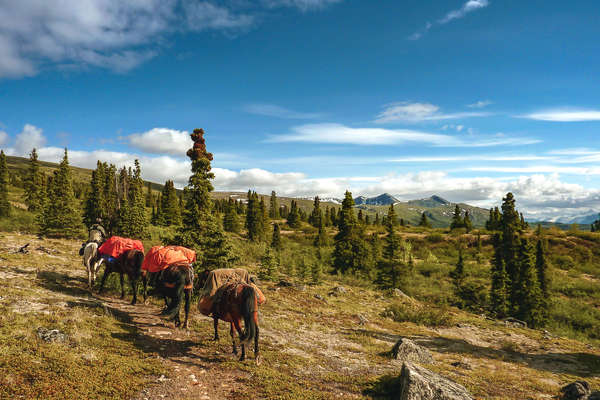
The riding team will provide a waterproof soft bag (80 l) for the riders to put their luggage in during the trail. Your belongings during the ride must fit in this bag - weight limit is 15 kgs (please remember your luggage is carried by pack horses!). It is possible to leave extra luggage at the ranch and Pierre will be happy to help you choose what to bring on the trail - best to bring a little too much, than not enough!
Head
- Helmets are mandatory. Equus Journeys strongly recommend that you wear a riding helmet and that you take your own to ensure a correct fit.
- Sunhat for when not riding
- Woolly hat in case it gets cold at camp or during the night
- Sunglasses - with a cord attached so they don't fly off when riding
- Buff or bandana
Upper body
- Long sleeved shirts provide protection from the sun
- T-shirts
- Thermal clothes
- Fleece, jumper or jacket - the evenings can be cold (at least two)
- Waterproof gear: good quality rain coat and waterproof trousers - the rains can be difficult to foresee and it's better to be prepared.
- Casual clothes for the evening
Legs
- Lightweight, comfortable riding trousers or jodhpurs - we recommend riding in them at home before taking them on holiday to ensure they don't rub
- Waterproof over trousers. Please don't bring ponchos instead as some of the horses may not be used to them.
- Warm leggings
- Casual clothes for the evening
- Swimsuit for bathing in the river or/and in the lake or just in case there is somewhere for a dip!
Hands and Feet
- Comfortable riding boots. We recommend short hiking boots with half chaps but you may wish to take long chaps to protect against thorns. Waterproof boots are recommended. We don't recommend taking your favourite long leather boots in case they get damaged
- Waterproof shoes/boots can be useful for abundant dew in the mornings or when it rains
- Sandals, flip-flops or trainers - something comfortable for the evenings
- Gloves - your hands are particularly exposed to the sun whilst riding and the evenings can be cold. It gets windy and cold in the mountains as well.
Nightwear
- Sleeping bag. You need at least a comfort factor down to minus 5 Celsius, but would recommend at least minus 8 or 10 Celsius.
- Sleeping bag liner - silk, cotton or fleece - adds an extra layer
- Inflatable mattress for your comfort sake. Mattresses are not provided.
- Pyjamas or tracksuits or thermals for sleeping in
(Please note that you can rent a sleeping bag and mattress on-site, see dates and prices)
Other useful items
- Mosquito net (to wear over your helmet)
- A good swiss army knife (please make sure to pack it in your checked luggage)
- Towels - camping ones will both dry and pack more easily
- Bumbag for carrying your camera and small items (passport, camera, sunscreen, lipbalm etc) whilst riding
- Camera and high capacity memory card. Spare battery
- Headtorch or small torch for moving around camp at night - bring spare batteries and bulbs
- Water bottle (2 litres or 2 x 1 litre)
- Swiss army knife
- Field glasses
- Wet Wipes or equivalent (for when washing facilities aren't available)
- A lighter to burn your toilet paper
- Small plastic bags for rubbish
- Ear plugs (for light sleepers)
Medical kit
- Any medication you regularly take
- Sunscreen and lip balm - should be high factor
- Insect repellent, preferably containing deet
- Blister plasters in case of any rubs
- Antiseptic cream, plasters, aspirin, anti-histamine, insect-bite salve etc...
- Spare prescription glasses/contact lenses
- Eye drops
- Imodium or similar anti-diarrhoea medication
- Re-hydration sachets
- Water purification tablets
- Antiseptic wipes
- Handwash gel
- Biodegradable soap is a must as your guides.
Our Recommendations
- Hard sided suitcase are not not permitted on this ride as your luggage is carried by packhorses. The riding team will provide a waterproof soft bag (80 l) for the riders to put their luggage in during the trail. Your belongings during the ride must fit in this bag.
- Backpacks cannot be worn whilst riding. Saddlebags are provided and we recommend a small bumbag or a coat with pockets so that you can carry small items with you during the day (passport, camera, sunscreen, lipbalm etc)
- We recommend travelling in your riding boots and carrying your hat and some riding clothes in your hand luggage - then if your luggage goes astray you are still able to ride!
Miscellaneous
- We recommend taking a copy of your passport and insurance documents with you in case you lose your originals
- Please take your rubbish home with you. There are no recycling facilities in this area, so take your used batteries, aerosols etc back home and dispose of them appropriately. Try to leave excess packaging material at home before travelling.
In your hold luggage
- Any liquids, such as shampoo, moisturiser, deodorant unless they are less than 100ml and all bottles can fit in a small, clear, plastic ziplock bag. We recommend biodegradable washing products where possible.
- Swiss army knife (or equivalent)
In your hand luggage
- Any valuables, such as your camera, ipod, ipad etc.
- Travelling in your riding boots and carrying your hat and some riding clothes is highly recommended - then if your luggage goes astray you are still able to ride!