The Serengeti Migration Safari

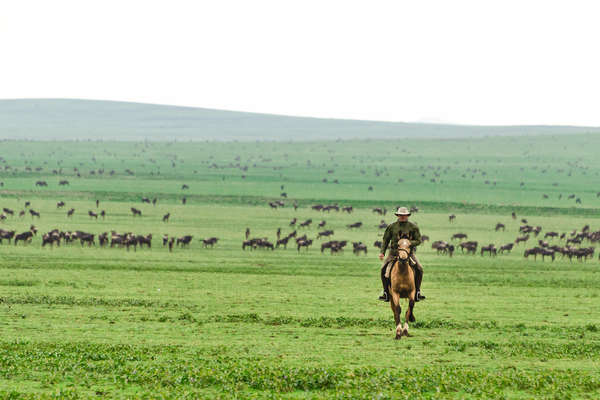
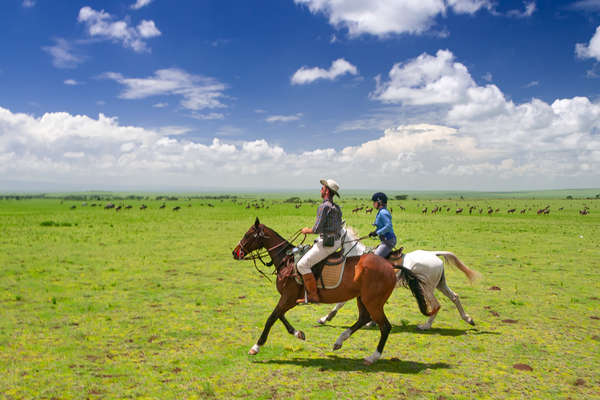
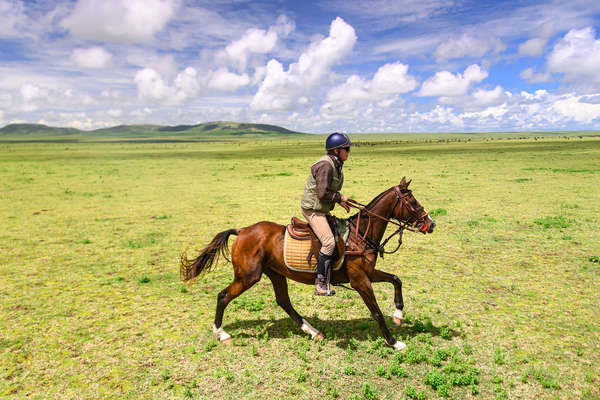
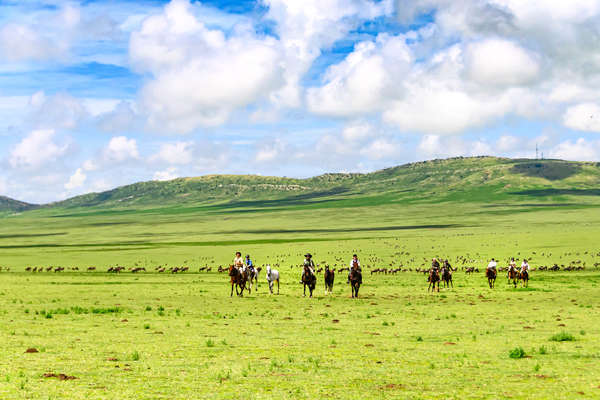
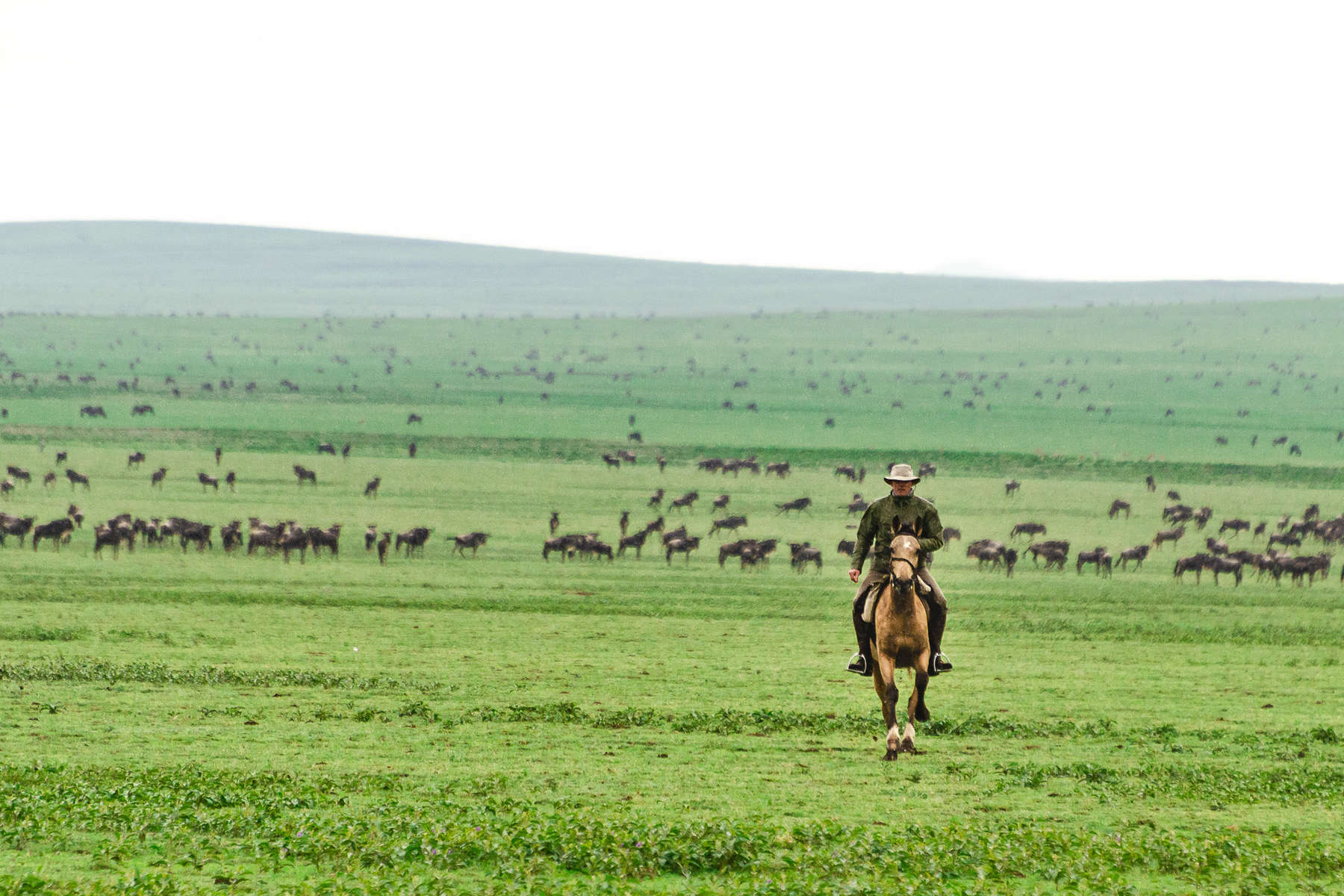
This extraordinary horseback safari through Tanzania combines world-class wildlife viewing with the thrill of riding across the legendary Serengeti plains. Beginning with a scenic flight over the Great Rift Valley, Lake Manyara, and the Ngorongoro Crater, the adventure quickly immerses riders in one of Africa’s most spectacular wilderness regions. Following the path of the Great Wildebeest Migration, this riding safari offers unforgettable encounters with vast herds of wildebeest, zebra, and gazelle, alongside predators including lions, cheetahs, and hyenas. Combining exceptional wildlife, breathtaking scenery, and true wilderness immersion, this horseback safari is an unforgettable African adventure for experienced riders.
Book now Print the details for this ride
Horseback Safari
10 days/ 6 days riding
From £6,977

From the horse’s mouth

  • January 2020 Rachel aged 38
    It was absolutely fantastic. The people, the ponies, the wildlife were all amazing. Even when the weather wasn't playing its part, Jo and her team found ways to make it work.
  • The Serengeti Migration Safari
  • The Serengeti Migration Safari
  • The Serengeti Migration Safari
  • The Serengeti Migration Safari
  • The Serengeti Migration Safari
  • The Serengeti Migration Safari
  • The Serengeti Migration Safari
  • The Serengeti Migration Safari
  • The Serengeti Migration Safari
  • The Serengeti Migration Safari

Itinerary

Highlights

- A chance of seeing the amazing wildebeest migration on horseback
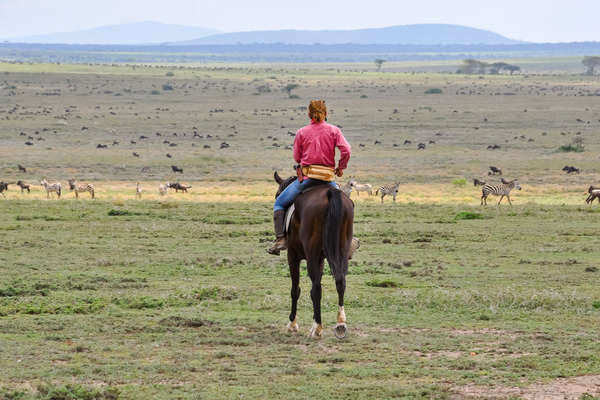
- Fantastic game viewing with a chance to see elephant, lion, buffalo, giraffe, zebra and numerous antelopes
- A very intimate safari experience with only 8 riders
- Ride through Maasai territory
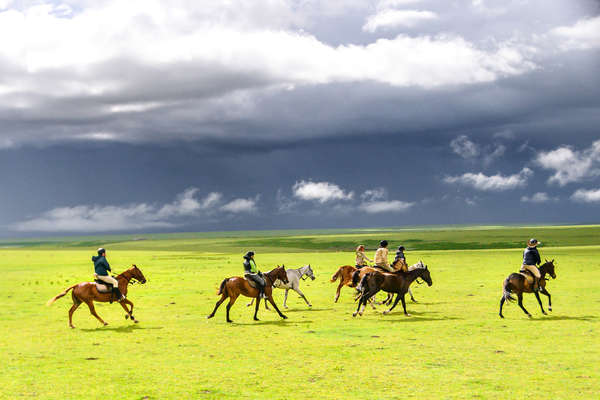
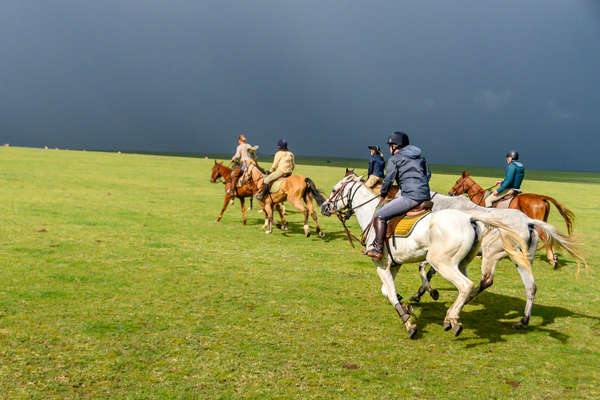
- Quality horses and a pacey ride to include a number of long canters and gallops, as well as the possibility to jump along the way
  • Day 1 1: EUROPE – ARUSHA - MOUNT MERU

    Fly to Kilimanjaro International airport. You will be spending the first night at a comfortable lodge. We generally use the Wildife residence but other lodges may be used depending on availability.

    Meet up with the rest of the group, followed by sundowner and dinner hosted by one of the guides for the safari. If there is a polo game on, sundowner will be at the polo club.

    IMPORTANT: the following itinerary is subject to the movement of the wildlife and the weather conditions. It may be slightly altered to give you the possible safari experience.
  • Day 2 2: ARUSHA-NDUTU-CAMP - 2 hrs riding

    Safari camp Tanzania
    The day begins with a leisurely breakfast. At 10:30 a.m., a short drive of 10 minutes to the private airstrip leads to a scenic flight over the dramatic Rift Valley, Lake Manyara, and the famous Ngorongoro Crater. Upon arrival in the Serengeti, a warm welcome awaits before embarking on a 2–3 hour game drive through this iconic wilderness, offering a first glimpse of the diverse wildlife. After reaching camp and enjoying a delicious lunch, a guide briefing outlines the upcoming adventures. In the afternoon, be introduced to your safari pony before embarking on an introductory ride, followed by a relaxing sundowner back at camp. The day ends with a dinner under the stars, a genuine African experience in the heart of the Serengeti.

  • Day 3 3: NDUTU - 5-7 hrs riding

    Safari camp Tanzania
    Awaken by the tent stewards with hot water in the basin, signaling the start of a new day in the Serengeti. After breakfast, head out on your horse to explore the open plains of this iconic landscape. Spot a rich variety of wildlife, including wildebeest, zebras, Thompson’s gazelles, jackals, and hyenas, as the African wilderness unfolds. Return to camp for a relaxing lunch and a siesta, before embarking on an afternoon ride. After the ride, return to camp for a refreshing gin and tonic, followed by dinner under the Milky Way, enjoying the peace and beauty of the Serengeti night.

  • Day 4 4: NDUTU - 5-7 hrs riding

    Safari camp Tanzania
    Day four marks the first moving day. Every safari is different, and today the journey follows the path of the wildebeest migration. Crossing the vast plains and tracing the meandering riverbeds, the search is on for predators and elephants in their natural habitat. A stop is made for a supported lunch, enjoyed in the midst of nature, followed by a relaxing siesta. Later, ride out in the golden light of the afternoon, continuing the journey towards a new camp location. Upon arrival, enjoy drinks and a delicious dinner under the open sky, before winding down and embracing a night of peaceful rest in this new and exciting location.

  • Day 5 5: NDUTU - 5-7 hrs riding

    Safari camp Tanzania
    A new day to explore a new area, discovering what magic and adventure the day has in store. Pick up the pace and gallop alongside a journey of giraffes, taking in the sight of these graceful creatures in their natural habitat. After a comfortable lunch back in camp, head out again on horseback in the later afternoon, continuing the exploration and embracing the Serengeti’s unmatched beauty.

  • Day 6 6: NDUTU - 3 hours riding

    Safari camp Tanzania
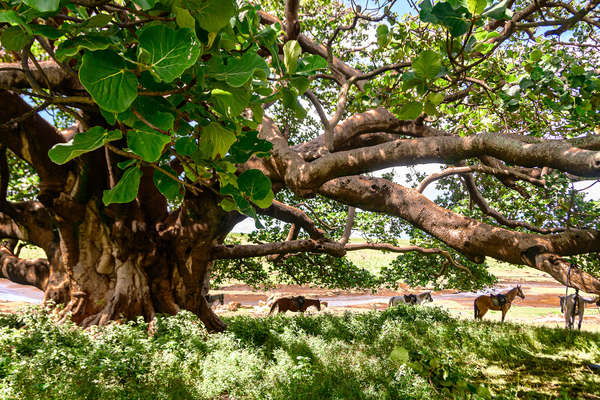
    Another moving day, ride across the vast Serengeti plains, hopefully dotted with close to two million migrating animals: wildebeest grunting around their newborn calves, while predators shadow their movements. Lunch is enjoyed under the shade of a tree, followed by a transition from horses to safari vehicles for an afternoon game drive. This area, known for one of the highest concentrations of big cats in Africa, offers exceptional wildlife viewing, but also sees a higher number of tourists drawn to its fame. After exploring this prime predator country, arrive at the night’s stop: a simple flycamp with mosquito-netted tents, a shared shower and toilet for ladies, and another for gents. Dinner is enjoyed around the campfire, without a mess tent or tables, a raw and unfiltered African bush experience.

  • Day 7 7: NDUTU - 4-5 hrs riding

    Safari camp Tanzania
    Before first light, steaming hot coffee is served to start the day. Head out in safari vehicles to catch the sunrise over the Serengeti, a prime time to witness big cats on the hunt. A field breakfast is served mid-morning, followed by a drive back toward the horse camp. By late morning, mounts are ready and the ride continues across the plains, breaking for lunch under the shade of an acacia tree. In the afternoon, the route tracks toward the edge of Olduvai Gorge, one of the most important paleoanthropological sites in the world, where some of the earliest human remains and tools have been discovered. This landscape, rich in both natural and human history, offers a powerful sense of time and place. From here, the journey continues to a new mobile camp, set in a different, and possibly even more spectacular, location.

  • Day 8 8: NDUTU - 5-7 hrs riding

    Safari camp Tanzania
    The final day to explore the beauty of the Serengeti ecosystem. Now likely closer to the Ngorongoro Highlands, the landscape opens up to sweeping views and cooler air. If conditions are right, the majestic outline of Oldoinyo Lengai (the only active volcano in Tanzania) may be visible, rising dramatically from beneath the escarpment. With luck and timely rains, even more wildebeest may have gathered on the plains, adding to the sense of scale and movement. Lunch is enjoyed in camp comfort, followed by a final afternoon ride, a chance to soak in the raw beauty, freedom, and immensity of this extraordinary land. The day ends with a celebratory final feast, before drifting to sleep to the primal grunts of wildebeest echoing through the night.

  • Day 9 9: NDUTU-ARUSHA - No riding

    An early breakfast in camp marks the start of the final morning. It’s time to say goodbye to the horses and the dedicated safari crew. Climb into safari vehicles for one last stretch through the wilderness, ascending into the Ngorongoro Highlands and driving along the rim of the world-famous crater, a last glimpse of the wild heart of Tanzania. At the park gate, the tarmac road signals a return to modern life. The drive to the airstrip takes roughly three hours, depending on the whims of African roads, with a stop at a local gallery for shopping and a chance to view or purchase tanzanite, a rare gem found only in Tanzania. The journey concludes with a short, scenic private charter fligh (just thirty minutes) to Kilimanjaro International Airport, offering a final aerial view of this extraordinary landscape. Here, the journey comes to an end as everyone departs and continues onward.

    Please note that this itinerary serves as a guideline. Changes may occur due to the movement of game, weather conditions, or other unforeseen circumstances. Any adjustments made will always be with the safety and best interests of the safari experience in mind.
  • Day 10 10: EUROPE

    Arrive back home.

Dates & prices

Price details

- International flights are not included but can be booked upon request.

- Wildlife Management Area (Park) fees are included in the above prices. Although we try to keep this website updated to reflect recent changes on taxes and levies, they are subject to change without prior notice.

- The group is made of 4-10 international riders maximum.

- The above rates are per person, based on sharing a tent. A single tent supplement applies and is $720/£560/€665 (2026/2027) for the duration of the safari. Not applicable if willing to share.

- Transfers:
The return light aircraft transfer from Arusha to Ndutu is around $685/£530/€630 (2026/2027) and will be invoiced and arranged by us.
Road transfers are included to/from Kilimanjaro airport or Arusha town. On the way back, your flight must depart after 2:00pm to allow time for the transfer. Private transfers can be organised at the cost of around $70/£60 per car if arriving a day early.

- If guests are travelling with an extra bag that is not needed on the riding portion of their trip (as space is limited in the tents). Arrangements can be made to store extra bags for a fee of $20 per person.

- For those who are not keen horse riders or not confident enough, options for vehicle safaris and walking safaris can be arranged. Their itinerary will be tailored to individual needs and sample itineraries are available upon request.

- Please note that there is a rider weight limit of 85kgs / 187lb / 13.3stones
Please Note
The itinerary may be modified at anytime for security reasons, meteorological or events beyond our control such as blocked roads, rivers in flood, drought, strikes and local holidays. Equus Journeys, our local partners and their local guides will always strive to find the best solution and will alter the itinerary as needed.
The names of the hotels and accommodation are given for information only and depending on availability, they may be modified without notice and replaced by another of a similar standard.

Price includes

Support Team

1 English-speaking horse guide
1 backup guide
1 extra equestrian guide (6+ riders)

Logistics

1 horse equipped with saddle and bridle per rider
1 support vehicle with driver and camping gear
1 cook and cook assitants
Groom team

Inland transport

Airport transfers

Accommodation

7 nights in mobile camp
1 night at a lodge

Meals

Full board from dinner on day 1 to lunch on day 9
All the drinks including wines and cocktails except at the lodge

Extras

Wildlife Management Area and Wildlife Department fees are included in the price

Price doesn't include

Transport

International flights
Internal flights (return) Serengeti to Arusha

Extras

Tips to the local team

Insurance

Cancellation and travel insurance are not included in the above listed price. Please note that insurance is mandatory. We recommend taking out an insurance policy as soon as your trip is booked to cover you in case of cancellation
Visas and personal purchase

Optional

Accommodation

Single tent supplement

Transport

Private airport transfers if required
  • Departure Return Price without flights Status
    13/12/2026 22/12/2026 £6,977 €7,954 $9,000
    Full
  • Departure Return Price without flights Status
    13/01/2027 22/01/2027 £6,977 €7,954 $9,000
    Last seats
    Book now
    23/01/2027 01/02/2027 £6,977 €7,954 $9,000
    Full
    03/02/2027 12/02/2027 £6,977 €7,954 $9,000
    Full
    13/02/2027 22/02/2027 £6,977 €7,954 $9,000
    Full
    24/02/2027 05/03/2027 £6,977 €7,954 $9,000
    Guaranteed departure
    Book now
  • Departure Return Price without flights Status
    06/03/2027 15/03/2027 £6,977 €7,954 $9,000
    Guaranteed departure
    Book now
    20/03/2027 29/03/2027 £6,977 €7,954 $9,000
    Guaranteed departure
    Book now

Equestrian info

Horses

Jo has a good selection of horses and polo ponies, a mixture of Thoroughbreds and local breeds. The horses are all purpose trained safari horses. Close to all of them play polo so are western or neck-rein trained (one hand). This allows you to take photos and dig into your saddlebag while out on safari. All horses are given lots of love, care and attention, therefore resulting in their nice characters and strong personalities. They all have their own heads with different temperaments, which allows Jo and her team to find a perfect fit for each rider.

Guide & local team

Your lead guide is Joanna Westermark or one of her team. She speaks perfect English and has a great knowledge of the fauna and flora.

All guides are qualified and professionally trained, with good knowledge about Tanzania’s fauna and flora. A keen interest is taken in the smaller creatures as well as bigger game. The cultural visits bring in knowledge of medicinal and traditional beliefs about Tanzania’s trees and plants.
.
Out on safari the lead guide is either armed or carries a bullwhip and communicate over radios and cellphones, with a mobile station in each vehicle

Minimum riding ability

Minimum riding ability

As this is an area of potentially dangerous game you need to be an experienced rider. You must be confident and able to control their horse (most thoroughbred crosses) at varying speeds on diverse terrain, ride one handed, rise at the trot, and maintain a secure, balanced raised seat out of the saddle while cantering / galloping for a
longer distance. A fit and proficient rider is of big advantage out on safari. There may be requirements to gallop out of danger and opportunities to jump (although these are optional).

Please note that there is a rider weight limit of 85kgs/187lbs/13st3

Pace

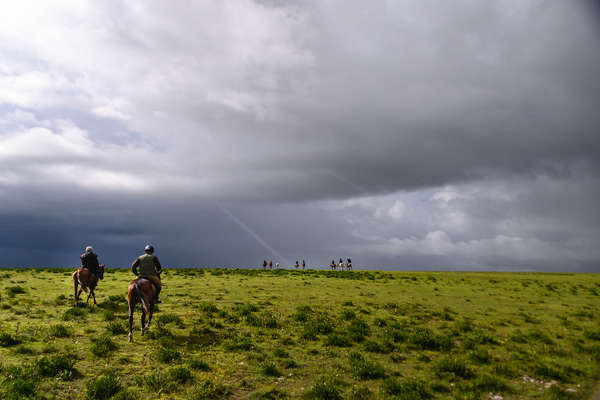
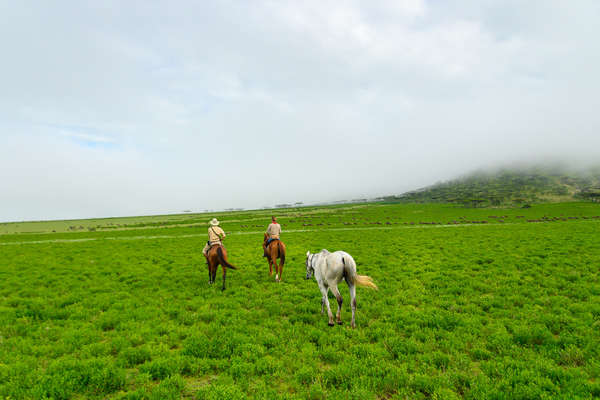
There will be long spells at walk whilst viewing the game, but there are also plenty of opportunities for long trots and canters across the open plains. The pace will be dictated by the terrain which can be difficult due to holes in the ground, or slippery during the wet season.

Tacking ability and participation

A team of grooms will take care of watering, feeding and tacking your horse. Your help will be required to collect the saddles and bridles at the lunch break and on arrival into camp.

Trip conditions and Requested experience

You will need to be physically fit in anticipation for the long hours in the saddle under the African sun (5-7 hours every day). The terrain is varied with holes, branched and fallen logs so you will need to be balanced and secure in the saddle. If you do not ride regularly you must get riding fit before joining this trip. Sometimes, you may be asked to dismount and lead your horse on foot.

Meeting different cultures and mentalities implies acceptance of these differences and respect.

Please check with us before booking if you have any medical conditions as you will be far from medical help. A must to disclose any medical conditions, allergies, or medications that might affect your ability to ride safely.


Equestrian equipment

Saddlebags are provided so that you can keep essentials with you during the day.

We use English/polo saddles on this safari.

We recommend our riders to wear a helmet to the correct standard and you should bring your own to ensure a proper fit. Helmets are not available to borrow.

Travel info

Comfort

Permanent Camp/Lodge (1 night): The first night is spent at a lodge (availability dependent) situated on a golf, polo, and wildlife estate, only 40 minutes’ drive from Kilimanjaro international airport. Each room has its own on suite bathroom, flush toilet, and white fluffy towels. There is WIFI, a swimming pool to be enjoyed and SPA treatments, yoga, golf, polo can be arranged prior to arrival.

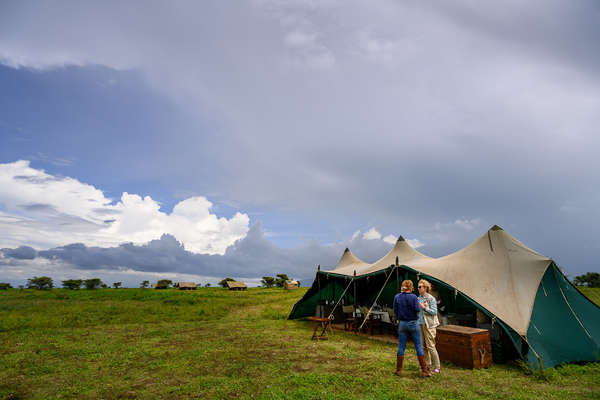
Mobile camp (7 nights): They are comfortable and spacious, being 4 X 4 meters with mosquito netted doors and windows to allow for ventilation but remain insect proof. Each tent is provided with a carpet, towel rack, bedside table and water bottle, bed and cotton linen and a solar light. Outside each tent there is a veranda with chairs and a washstand that you share with your tent partner. Each tent has its own bush toilet and bucket shower. The toilet is a traditional short drop style toilet with a nice wooden toilet seat over a metal box with open sides. Our motto is "Rhinos cover it please do the same". There is a small mound of dirt with a trowel next to the toilet seat for this purpose. The shower is a traditional star gazing canvas bucket.

Note - in case of very wet weather, those large tents can be replaced by smaller dome tents.

Meals

Local chefs will be preparing all of your meals.
- Traditional breakfasts with juice, tea and coffee.
- Lunch will be prepared on the spot when the logistic team joins you at mid-day.
- For dinner, the chefs will cook delicious local and international dishes, always accompanied by bread and fresh salads.

All drinks are included in the mobile camp, however not at the lodge.

Climate

Tanzania has two distinct climatic zones:
- The Highlands (more than 1500, altitude). It is a pleasant semi-tropical climate.
- The coast, with a humid equatorial climate
The higher the terrain, the lower the temperatures will be. As you get closer to the Indian Ocean, temperatures will get warmer and sometimes it is very hot!

Seasons:
- Dry season: From May to October. The hottest months are from December to February.
- Long Rains season: From mid-February to early May. However, the high rainfall month is April. Evenings can be cool, even cold.
- Short rains season: Early November to mid-December. During these months it does not rain all day, only at certain times.

Tips

The guideline from the local team is 30 USD per guest per night for the shared /communal tip, total of 240 USD per person for the entire safari. If one wishes to give any specific crew member something extra, please feel free to do so yourself at any time during the safari. Your lead guides are not included in the shared tip and if one wish to tip please do so directly to the guides, a suggested guideline of 500 USD per guest per safari.

Packing list

Important: For horse safaris, you should wear neutral coloured clothing (green, brown, beige or grey) to blend in with the landscape.

Please don't take a hard sided suitcase. Your luggage should be soft sided, particularly for light air transfers. A very strict weight limit of 15 KG per person, including hand luggage applies on the small aircraft transfer.

Head
- A riding helmet is strongly recommended and often compulsory. We recommend that you take your own to ensure a correct fit. Helmet manufacturers (GPA, HKM, LAS Helmets, Lamicell, Troxel, Equithème) now offer horse-riding helmets that are ventilated, strong, light and comfortable. You also have the option of buying protective shells to go under your hats (Ranch & Rider, Lexington Safety Products) or western hat helmets (Troxel)
- Sunhat for when not riding - Essential
- Sunglasses with high UV protection- they should have a cord attached so they don't fly off when riding
- Buff or bandana for protecting your neck and face from the sun.

Upper body
- 4-6 Long-sleeved shirts to provide protection from the sun (quick dry fabric)
- T-shirts and jumpers for the evening
- Lightweight fleece or jumper - some nights can be cold
- Waterproof jacket - rain can be difficult to predict and it's better to be prepared.

Legs
- 2 pairs of lightweight, comfortable riding trousers, jeans or chaps - we recommend riding in them at home before taking them on holiday to ensure they don't rub.
- Casual clothes for the evenings (jeans or walking trousers)
- A swimming costume may be useful.
- Non-irritant cotton or synthetic underwear

Hands and Feet
- Light hiking boots or comfortable riding boots. We recommend short boots with half chaps.
- Lightweight shoes or trainers for the evenings
- Several pairs of socks
- Gloves - your hands are particularly exposed to the sun.

Horse riding extras
- A soothing cream may be useful to treat areas irritated by long hours in the saddle
- Backpacks are not permitted whilst riding. You can carry all your small belongings (lipstick, sunscreen, passport, mini camera, glasses, etc.) inside your jacket's pockets or in the saddlebags.

Other useful items
- Travel bag, preferably a soft bag 70-100ltrs (15kg max.)
- Water bottle (1.5l)
- Head torch or small torch for moving around at night - bring spare batteries and bulbs
- Toiletries (biodegradable wipes to replace water)
- Swiss army knife or equivalent (in checking-in luggage!!)
- Backpack of 25-30ltrs
- Earplugs (may be useful)
- Camera and high capacity memory card. Spare battery
- A pair of binoculars
- Small plastic bags to throw in the trash.

Medical kit - Medical kit - A First Aid Kit is always carried in the back up vehicle on safaris, although we ask guests to bring any required medics as well as malarial prophylaxis.
Make sure any allergies (to medication or otherwise) are clearly stated in your medical kit
- Any medication you regularly take
- Painkillers
- Imodium or similar anti-diarrheal medication
- Vitamin C tablets
- Sunscreen and lip balm - should be high factor
- Insect repellent
- Eye drops
- Hydrating/ soothing cream
- Plasters
- Blister plasters in case of any rubs
- Antiseptic cream, plasters, aspirin, anti-histamine, insect-bite salve etc..
- 10cm wide bandage
- Spare prescription glasses/contact lenses
- Re-hydration sachets
- Antiseptic wipes
- Hand wash gel

General information
- The internal flight only allows up to 15 kg per passenger and no more than 100ml of liquids. Please don't take a hard sided suitcase. Your luggage should be soft sided, particularly for light air transfers.
- We recommend taking any valuables, such as your camera, iPod, iPad, medicines and glasses etc. in your hand luggage. Travelling in your riding boots and carrying your hat and some riding clothes is highly recommended - then if your luggage goes astray you are still able to ride!
- We recommend taking a copy of your passport and insurance documents with you in case you lose your originals.
- If, in wishing to 'travel light', you plan to wash your clothes throughout the trip, please ensure you bring biodegradable laundry products with which to do your washing.
- Ensure you bring something for your chemical waste (batteries, aerosol cans, cream tubes, plastic wrapping), in order to take it back to Europe where recycling and waste disposal is done well and effectively. We advise to, wherever possible, avoid altogether bringing wrapped products to Tanzania. If you do, ensure you take them back to Europe with you

Sustainable tourism

    Through a partnership with Mwandamo, a women-run Tanzanian organisation, Kaskazi (our local operator) continues to support transformative work in women’s health. Every safari booked includes a donation that directly helps provide education and compassionate care across Northern Tanzania. For guests wanting a deeper understanding, visits before or after safari will now be possible — a chance to witness the impact firsthand.

    Sustainable tourism recommendations: 

    1. Travel light. It's a little known fact, but the lighter you pack, the better for the environment as heavy bags will produce higher emissions (when flying a plane or driving a car!).
    2. Reduce plastic waste. Take your favorite reusable bottle with you. Avoid single-use bags, cups, or straws.
    3. Preserve nature. Always take your rubbish with you during the ride and recycle them. Leave all the flowers or plants as you found them, and never get too close when observing wildlife. Make sure to use eco-friendly products such as body wash or laundry detergent (if camping) to protect both your skin and the environment.
    4. Choose your experiences carefully. Respect animal life by not participating in any activities that abuse wild animals (shows, elephant rides, etc.).
    5. Support local populations. Buy local handicrafts, be respectful of customs, and learn about the culture of local communities.
    6. Share! Raise awareness among your family and friends about sustainable tourism.

    For more information please see this page.

    Did you know?

    Did you know?


    The Serengeti Migration is probably one of the most exciting safari experiences there is – and it is even more special to take it all in on horseback. The Great Wildebeest migration is the annual migration of large herds of wildebeest (also known as gnus) and gazelle as they make their way from the southern Serengeti plains in Tanzania, to the Masai Mara in Kenya in search of greener pastures. Of course, such an abundance of plains game is a magnet for big cats…

    You can witness the wonders of the migration all year-round. However, this riding safari focuses on a small area of the Serengeti. As such we only run dates from January to March, when the herds are in the southern area of the Serengeti and the Ndutu plains. In this greener area, many wildebeest calves will be born before they make the long trek to the Masai Mara.

    Watching the Seregenti wildebeest migration on horseback is one of the finest horse safaris there is.

    On the blog

    A riding safari in Africa is an unforgettable experience. Really, nothing quite compares to watching giraffe on horseback, race with a herd of zebra or coming face to face with elephant. Horseback safaris are amongst our most exciting riding holidays and we are pleased to have a fantastic selection of options to suit novice and experienced riders alike. We have written the following guide to help you select your safari based on what wildlife you want to see. Read more on the blog. 

    Customer reviews

    Customer reviews

    All of our reviews are real, honest opinions from riders who have recently travelled with us. Upon their return, our riders will receive an email inviting them to share their experiences from their trip. Good or bad, each review will be published on our website, provided that they respect our editorial guidelines.
    • Rachel aged 38 1 trip
      January 2020
      It was absolutely fantastic. The people, the ponies, the wildlife were all amazing. Even when the weather wasn't playing its part, Jo and her team found ways to make it work.
      • Horses
      • Programme
      • Accommodation
      • Local guide

      Equus Journeys' reply

      Thanks for your feedback Rachel, so pleased you enjoyed your holiday with Jo & her team!