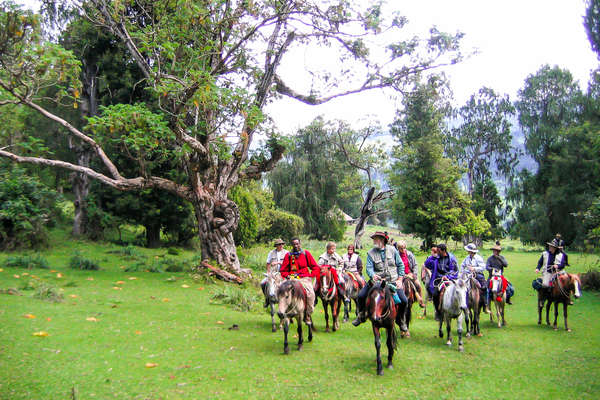
Group of riders on a trail riding expedition in Ethiopia

Riders of Abyssinia

Explore Ethiopia on horseback! This ride will take you across the Bale mountains and national park, the ancestral land of the semi-nomadic Oromo people. With long hours in the saddle, this is a demanding riding expedition for aspiring explorers and experienced riders. You will ride local horses at an altitude between 2500-4000m, discovering the incredibly varied Ethiopian flora and fauna - including rare endemic species such as the Abyssinian wolf. Meeting Oromo shepherds is an extraordinary cultural experience, because horseback travel is also about discovering other equestrian traditions.
Book now Print the details for this ride
Exploration Rides
14 days (8 on horseback)
From £2,558
  • Group of riders cantering on an Ethiopian trail riding expedition
    Cantering through the Ethiopian highlands
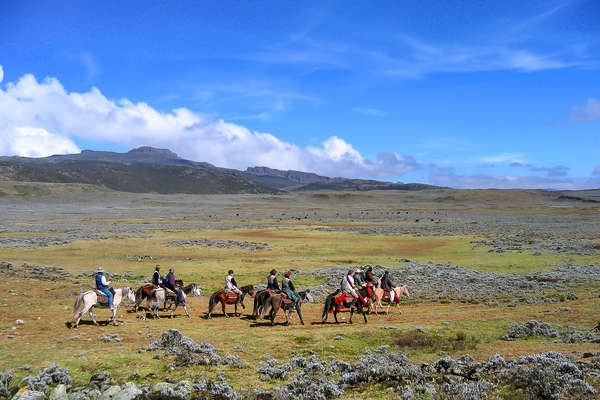
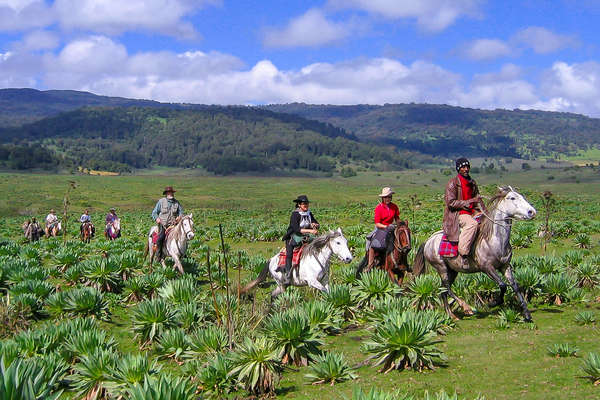
  • Groups of riders on a riding holiday in Ethiopia
    Riding holiday in Ethiopia
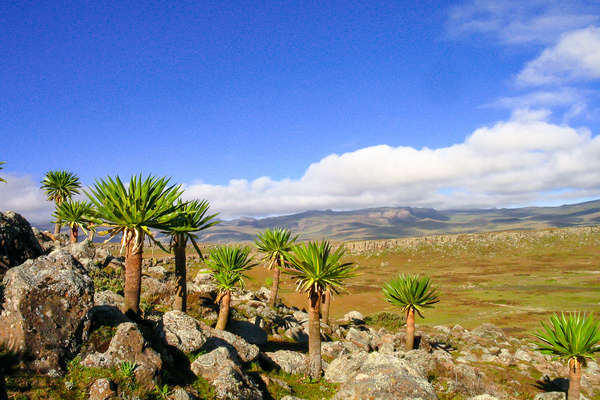
  • Ethiopian landscape and palm trees
    Riding adventures in Ethiopia
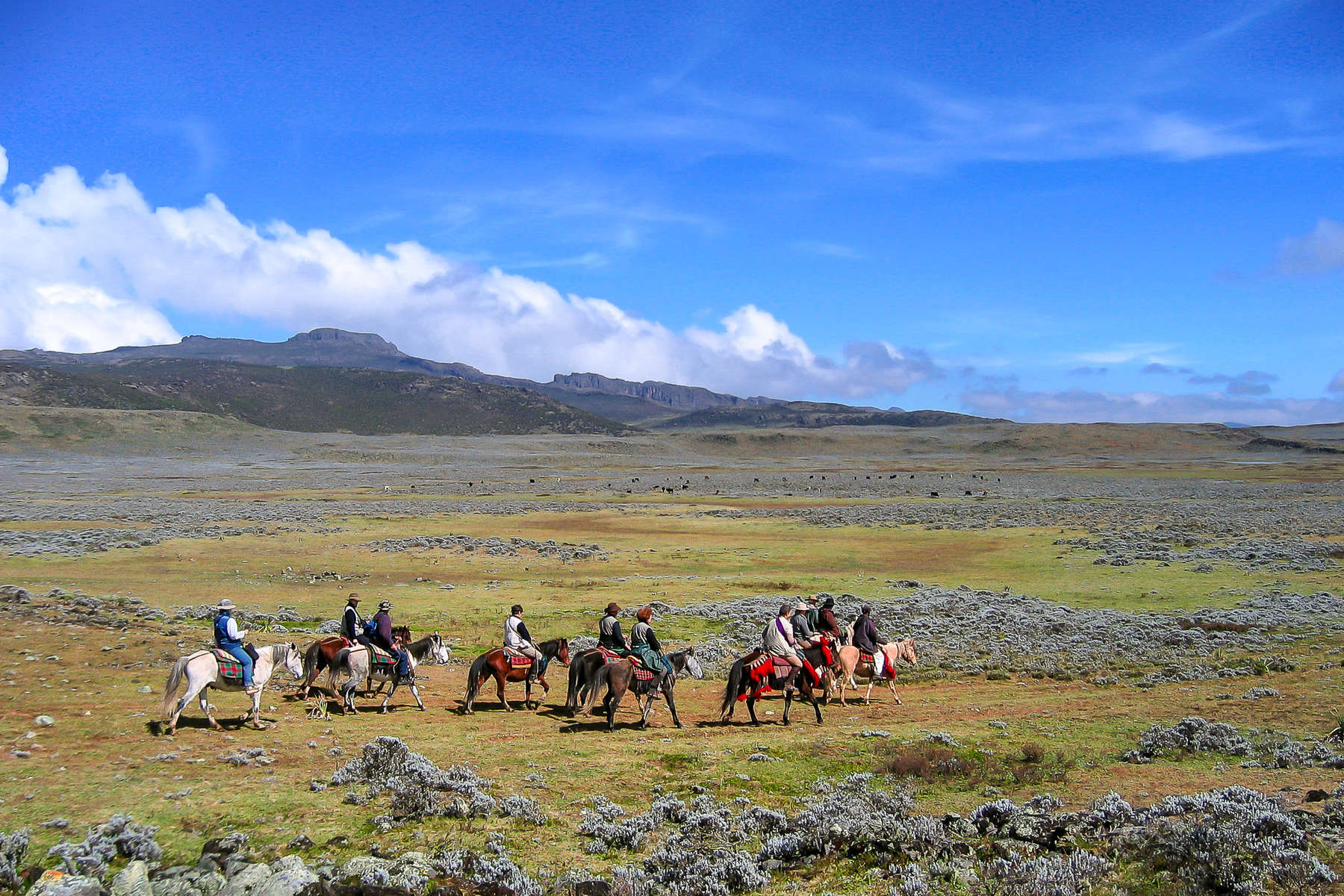
  • Group of riders on a trail riding expedition in Ethiopia
    Explore Ethiopia on a horseback adventure
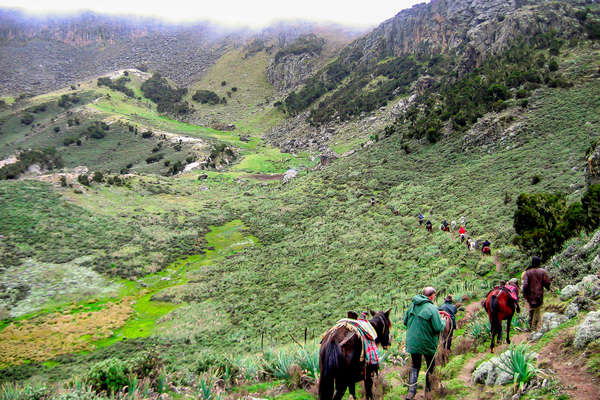
  • Riders riding down  a small canyon during a horseback holiday in Ethiopia
    This is an adventurous trail riding holiday
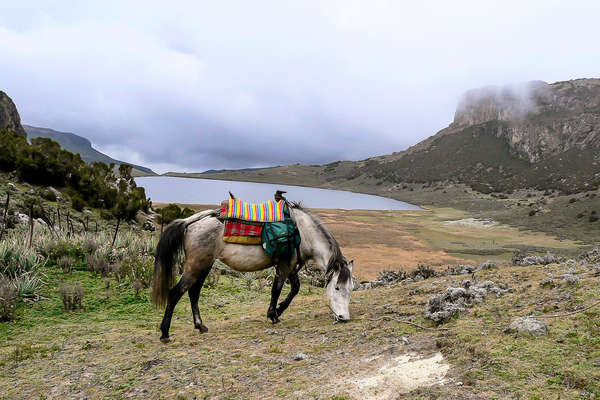
  • Oromo horse in Ethiopian landscape in Ethiopia
    Enjoy the views from the back of your Oromo horse
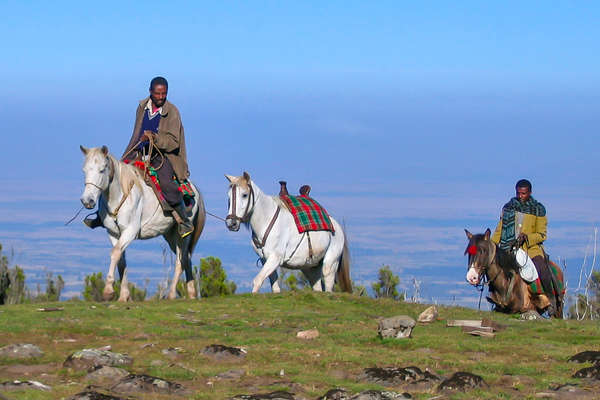
  • Horseback riders trail riding in Ethiopia
    You ride high up in the Ethiopian highlands
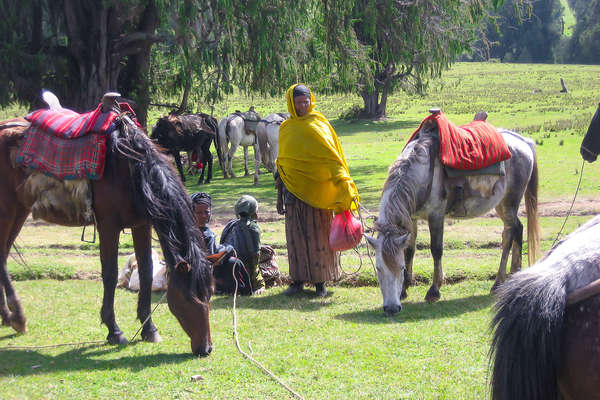
  • Locals helping with horses on a trail riding holiday in Ethiopia
    Discover a new culture - not just an equestrian experience
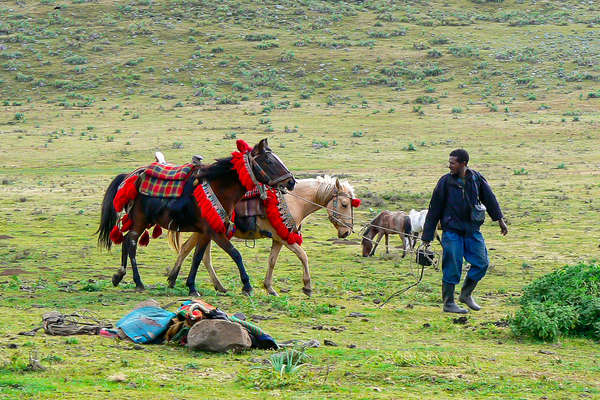
  • Ethiopian guide leading two Oromo horses on a trail ride
    Discover a different equestrian culture on this riding holiday

Itinerary

Highlights

- Meet Oromo riders and discover their ancient equestrian traditions.
- Explore unspoilt landscapes and discover endemic species
- Ride local ponies, in the traditional Oromo style (the riding style is a little bit different from our English riding style)
- After a day sightseeing in Addis Ababa, reconnect with nature and leave the city buzz behind, riding off the beaten path.
  • Day 1 EUROPE - ADDIS ABABA

    Fly from Europe to Addis Ababa, arrival in Addis Ababa the following morning.

    Flights to Addis are not included but we are happy to help with this upon request.
  • Day 2 ADDIS ABABA

    You will arrive in Addis Ababa in the morning and will be met by a representative from our local team and be transferred to Debre Damo Hotel (or similar) for check-in. After lunch there will be a half-day of sight seeing including the National Museum where you can see different archaeological findings including "Lucy", the 3.5 million year-old skeleton. You will be driven to a panoramic viewpoint of the city from Entoto Mountain (3200m) before visiting "Mercato", one of the largest open-air markets in Africa. Dinner and overnight at the hotel.
  • Day 3 ADDIS - DODOLA - CHANGITY

    Drive southeast to the Bale Mountains, passing through Adama and Asela. From Asela, the scenic road runs between the Arsi Range, Mount Kaka (4,200 m), and Mount Honkolo (3,900 m). En route, visit the impressive Wabe Shebelle Waterfall. Upon arrival in Dodola, enjoy coffee before continuing by vehicle to Botolle (7 km), followed by a 3 km walk to Changity campsite. Set at the forest edge, the campsite offers beautiful scenery and rich birdlife. Overnight camping.
  • Day 4 CHANGITI - ANGAFU - 2-3H riding

    After breakfast at Changity (2,750 m), pass through hamlets and farmland before beginning the horseback ride to Angafo (3,460 m). Ride through juniper and Hagenia forests rich in herbs and shrubs, following the Kora River. Lunch is taken in the bush. The route continues through forest and moorland with heather, climbing higher where giant lobelias and thistles dominate the landscape. Upon arrival, enjoy a short walk along the ridge above Angafo camp, offering magnificent valley views. Distance: 15 km. Overnight at Angafo camp.
  • Day 5 ANGAFU - MOLOLICHO - 5-6 hours riding

    Ride from Angafo to Mololicho camp (3,080 m), passing through Erica bush and into Afro-alpine humid zones. The ascent over the Wagabata Ridge is particularly exciting. Much of the route passes through woodland dominated by Hagenia abyssinica and Juniperus procera, with Hagenia trees flowering from November to February. During this time, the difference between male and female trees is visible, with deep red flowers on the female trees traditionally used as a remedy for intestinal worms. Distance: 17 km, approximately 5–6 hours riding. Overnight at Mololicho camp.
  • Day 6 MOLOLICHO - DURO - 5-6 hours riding

    The morning ride leads from Mololicho to Duro (3,350 m) across open plains with giant lobelias, livestock grazing areas, and wide landscapes. En route, cross the perennial Meribo River. Duro offers one of the most impressive viewpoints and represents the longest distance between camps on the Adaba–Dodola trek. Continue ascending to Karaushe (3,526 m) for a panoramic lunch stop. As the trail is unsuitable for horses, descend on foot to the Dima River, surrounded by Hagenia and Erica trees. After crossing the river, remount the horses, enjoying sweeping views of the lowlands. Upon arrival, take a short walk along the ridge to explore the scenery. Distance: 18 km, approximately 6 hours riding. Overnight at Duro camp.
  • Day 7 DURO - AJENJE - 4-5 hours riding

    After breakfast, ride to Ajemjim camp (3,360 m) through beautiful forest dominated by Juniperus, herbs, and shrubs. From horseback, look into the treetops for sightings of black-and-white colobus monkeys resting in large juniper trees. The route first follows a mountain valley, then climbs onto a ridge with views toward the volcano-shaped Mount Kaka and Mount Honkolo in the Arsi region, as well as across the Adaba–Dodola plains. Distance: 16 km. Overnight at Ajemjim campsite.
  • Day 8 AJENJE - MOROBAWA - 4-5 hours riding

    Ride from Ajemjim into Bale Mountains National Park, reaching Morobawa (3,500 m). This scenic route offers diverse landscapes and cultural encounters, passing through lush green hills and mountain scenery that provide insight into everyday rural life. After approximately 2.5 hours, views of Mount Morobawa begin to appear. This area is an excellent place to spot the Ethiopian wolf. Distance: 19 km. Overnight at Morobawa campsite.
  • Day 9 MOROBAWA - SODOTA - 5 hours riding

    After breakfast, ride along the Web River Valley, characterised by open vegetation and striking rock formations. The area is rich in birdlife, including Tawny Eagles, Augur Buzzards, Yellow-billed Kites, and falcons. The Web Valley dominates the central Bale Mountains, with its headwaters originating in the swamps and lakes around Morobawa. Pass small Oromo settlements and livestock grazing areas as the river meanders toward the Kotera Plain, another key area for observing the Ethiopian wolf. Distance: 20 km. Overnight in Sodota Valley.
  • Day 10 SODOTA - RAFU - 5 hours riding

    Enjoy sunrise at camp before riding toward Rafu (3,800 m) through ever-changing Erica vegetation and dramatic landscapes. Pass through the beautiful Mararo Valley, where Lammergeyers, eagles, and other bird species can be seen. Take a break by a spring between two ridges, surrounded by outstanding natural scenery. Continue climbing into Afro-alpine vegetation and the high Erica zone, passing volcanic rock formations near Rafu. From here, enjoy spectacular panoramic views. Wildlife sightings may include rock hyrax, birds of prey, cliff springer, and other mammals. Distance: 21 km. After dinner, enjoy a campfire while the guide shares local stories and folklore. Overnight at Rafu campsite.
  • Day 11 RAFU - GERBA GURACHA - 5 hours riding

    Today is the longest riding day, covering 23 km across the largest Afro-alpine region on the African continent. Ride along the Sanetti Plateau at over 4,000 m above sea level, the largest continuous high-altitude area in Africa. “Sanetti” in Afan Oromo means “where the strong winds blow.” This is prime habitat for the Ethiopian wolf, the rarest canid in the world. In the distance, see Tulu Dimtu, Ethiopia’s second-highest peak. Afro-alpine rodents, including giant mole rats, mice, and rats, dominate this harsh environment, with 16 rodent species found in the Bale Mountains, 11 of them endemic to Ethiopia. Take a short walk around Lake Gerba Guracha (“Black Lake” in Afan Oromo), where magnificent views stretch toward the lowlands. The lake and surrounding wetlands are home to various waterbirds, including endemic species. After dinner, gather around a campfire for stories and folklore. Overnight camping at Gerba Guracha.
  • Day 12 GERBA GURACHA - LANGANO

    After breakfast, walk uphill for 20–30 minutes to meet the vehicles. Drive from the Sanetti Plateau down to Goba, Robe, and Dinsho, stopping at the Gaysay Valley grasslands in the northern section of the valley. This area is one of the best places to observe wildlife and birdlife, including the largest population of endemic mountain nyala, as well as reedbuck, warthogs, and olive baboons. Continue driving through Garamba, crossing the 3,500 m tree line, with spectacular views of jagged mountain outcrops and dramatic valleys opening toward the northern plains. Descend through Hagenia and juniper woodland, watching for black-and-white colobus monkeys in the treetops. Lunch in Dodola, then continue to Langano, crossing open plains and wooded areas via Kofele, Shashemene, and Arsi Negele. Along the way, observe Lakes Shalla and Abijata on the left and Lake Langano on the right. Lake Shalla is Ethiopia’s deepest lake, reaching 266 m. Overnight at Sabana Resort.
  • Day 13 SHASHEMENE - ADDIS ADABA - EVENING FLIGHT

    Drive back to Addis Ababa, stopping for lunch in Bishoftu at Pyramid Hotel on the lakeshore. Continue to Addis in the evening, where you are invited to enjoy a traditional Ethiopian dinner and coffee ceremony at a city restaurant.

    After dinner, transfer to the airport for your international departure, or return to your hotel if staying overnight in Addis Ababa.
  • Day 14 ADDIS

    Arrive home

Dates & prices

Price details

- International flights are not included, based on sharing a double/triple room or dormitory style accommodation during the trail.

- The group is comprised of between 3 and 10 riders, plus guides.

- Please note: the ride will also confirm for 2 riders on payment of a supplement of c. $360/€350/£300 per person. Once the group has reached 3 people, we will remove this supplement from your invoice and refund you if you have already paid it.

- We can organise a la carte departures for groups of 5 riders minimum, between October 15 and March 30.

- There is no single supplement if you are willing to share a room/tent with another guest of the same sex. To guarantee your own room/tent there is a single supplement of €340/£290/$350.
Please Note
The itinerary may be modified at anytime for security reasons, meteorological or events beyond our control such as blocked roads, rivers in flood, drought, strikes and local holidays. Equus Journeys, our local partners and their local guides will always strive to find the best solution and will alter the itinerary as needed.
The names of the hotels and accommodation are given for information only and depending on availability, they may be modified without notice and replaced by another of a similar standard.

Price includes

Support Team

1 Ethiopian, English speaking guide in charge of the horses and itinerary
1 guide local to the Bale Mountains
1 English-speaking tour leader

Logistics

1 horse per rider (you will swap for fresh horses three times during the trail)
4 horsemen + 8 pack horses (groups of 10 riders)
1 head of logistics (groups of 10 riders)
1 cook

Inland transport

All inland transfers mentioned in the trip
Airport transfers unless your dates differ from the other riders

Accommodation

Camps: 3-men tent for two riders and foam mattresses
Double or twin room in a 3* (local standards) in Addis
Mountain huts

Meals

As per itinerary, full board from breakfast on D3 to breakfast on day 13 (no meals in Addis)

Extras

National Park entry fees

Price doesn't include

Meals

Beverages and personal extras
Meals in Addis

Transport

Visa fees
International flights

Extras

Tips to the local team
Small group supplement - see above for the details
Photography fees

Insurance

Cancellation and travel insurance are not included in the above listed price. Please note that insurance is mandatory. We recommend taking out an insurance policy as soon as your trip is booked to cover you in case of cancellation
  • Departure Return Price without flights Status
    21/11/2026 04/12/2026 £2,558 €2,916 $3,300
    Open
    Book now

Equestrian info

Horses

On this trip you will ride local Oromo horses. They are small but sturdy and very sure-footed and well looked after. Our local partner works with three different horse farms from local villages.

Guide & local team

English speaking local team.

Minimum riding ability

Minimum riding ability

You need to be a capable rider who is used to riding outdoors and fit enough for some long hours in the saddle. You are riding in a very remote location across rugged terrain and there is no option to miss a day if you get tired.

You will have to adopt the traditional riding style: no bit, one rein, getting on the right side, etc. It will not take you long to adapt!

Rider weight limit: 85 kg / 187 lbs. Heavier riders please contact us.

Pace

The ride is not fast because of the altitude and steep terrain. Some trots and canters when the terrain allows.

Tacking ability and participation

The team of horsemen will look after your horse for you.

Trip conditions and Requested experience

You need to be fit and in good physical condition. You will be riding at altitude with some very rough terrain to cross, although the climb is gradual. There are some sections where you may need to dismount and lead your horse on foot. Please check with us if you have any medical conditions as you will be a long way from medical help.

You should be prepared for long hours in the saddle - the ride on Day 11 is a particularly demanding one.

The weather, especially at altitude, can be unpredictable and it can rain even in the dry season. Please come prepared with good riding gear and warm clothing/sleeping bags.

Previous experience of riding a trail of several days is a definite advantage but is not required. Riders who do not ride regularly are requested to get riding fit prior to the start of their holiday.

This is a pack trip - all your belongings are carried by pack horses and there are no back-up vehicles. Please make sure to read the packing list carefully.

Visiting a new country offers the opportunity to meet other cultures with different mentalities, therefore it is important to accept these differences and respect the local way of life.

Equestrian equipment

Local tack.
The stirrups and stirrup leathers are small so if you have long legs or big feet it is a good idea to bring yours.

Helmets are not mandatory. We recommend our riders to wear a helmet to the correct standard and you should bring your own to ensure a proper fit.

Travel info

Comfort

In Addis: 4***star hotel, in double or triple rooms with private bathrooms. The hotel is simple but clean and comfortable.

During the ride: First and last night at a lodge. All other nights are camping, sometimes on eco-hut grounds. Please bring your own sleeping bag. Foam mattresses are included. Please note this is a rustic ride with basic conditions and minimal comfort. During the ride, there are only 3 nights where you can shower.

Meals

The meals are cooked for by your camp cook.

Breakfast: tea, coffee, omelettes or boiled eggs, bread, jam, fruit.
Lunch: light lunch of sandwiches or pasta/rice, vegetables, fruit.
Dinner: 3-course meal starting with a home soup, meat and vegetables, and fruit as a dessert.

Water is provided.

Climate

The weather in this part of the world can be humid and unpredictable. The mountains see rainfall about 8 months a year, October marking the start of the dry season. Please expect cold nights (sometimes below 0°C), but warm days (35°C - 40°C), sometimes windy. In November the daytime temperatures are much cooler, around 15°C.

Tips

Tipping is expected. We recommend around £35-45 per rider per person.

Packing list

You are riding at high altitude and the weather can be unpredictable. Please make sure to pack sensibly and bring enough warm clothing to get you through the ride!

Your luggage is limited to 20 kg - please bring soft bags as opposed to hard sided suitcase.
Don't forget to bring sleeping bag, foam mattresses are included.
Bringing your own stirrups + stirrup leathers is recommended.

Head
- Helmets are not mandatory but recommended. We recommend that you take your own to ensure a correct fit. There are many lightweight options available nowadays
- Sunhat for when not riding
- Sunglasses - with a cord attached so they don't fly off when riding
- Buff or bandana
- Warm hat for cold nights when camping

Upper body
- Thermals (long or short sleeved)
- Long sleeved shirts provide protection from the sun and are an extra layer
- T-shirts
- Lightweight fleece or jumper
- Warm fleece or jumper (and a spare in case one gets wet)
- Warm and waterproof jacket - it can rain at any time of year and the evenings can be particularly cold
- Swimming costume, may be useful.

Legs
- Lightweight, comfortable riding trousers or jodhpurs - we recommend riding in them at home before taking them on holiday to ensure they don't rub
- Thermals
- Casual trousers for the evenings, such as jeans or tracksuit bottoms
- Waterproof over trousers

Hands and Feet
- Comfortable riding boots. We recommend hiking boots with half chaps but you may wish to take long chaps as an extra layer against inclement weather. We don't recommend taking your favourite long leather boots in case they get damaged and because the terrain is not suitable.
- Waterproof shoes/boots can be useful for abundant dew in the mornings or when it rains
- Trainers or equivalent light shoes for moving around the camp in the evenings
- Several pairs of warm, thick socks
- Gloves - your hands are particularly exposed to the sun, cold or rain whilst riding. Waterproof gloves can be particularly useful

Nightwear
- Sleeping bag. You need at least a comfort factor down to minus 5-10°C.
- Sleeping bag liner - silk, cotton or fleece - adds an extra layer
- Mattresses are provided, you can bring a small inflatable or foam mattress for extra comfort.
- Pyjamas or tracksuits or thermals for sleeping in

Other useful items
- Solar powered battery charger.
- Towels - camping ones will both dry and pack more easily
- Small backpack for accessing items required during the day (carried by support crew)
- Camera and high capacity memory card. Spare battery
- Bumbag for carrying your camera and small items whilst riding
- Headtorch or small torch for moving around at night - bring spare batteries and bulbs
- Water bottle (2 litres or 2 x 1 litre)
- Swiss army knife
- Field glasses
- Wet Wipes or equivalent (for when washing facilities aren't available)
- Toilet paper and a lighter to burn it with
- Small plastic bags for rubbish
- Ear plugs (for light sleepers)

Medical kit
- Any medication you regularly take
- Sunscreen and lip balm - should be high factor
- Insect repellent, preferably containing deet
- Blister plasters in case of any rubs
- Antiseptic cream, plasters, aspirin, anti-histamine, insect-bite salve etc...
- Spare prescription glasses/contact lenses
- Eye drops
- Imodium or similar anti-diarrhoea medication
- Re-hydration sachets
- Water purification tablets
- Antiseptic wipes
- Handwash gel
- Micropur tablets to purify water

Miscellaneous
- The stirrups and stirrup leathers are small so if you have long legs or big feet it is a good idea to bring yours.
- Please don't take a hard sided suitcase. Your luggage should be soft sided with a capacity of 60-80 litres. We recommend taking a backpack or similar.
- Backpacks cannot be worn whilst riding. We recommend a small bumbag or a coat with pockets so that you can carry small items with you during the day (passport, camera, sunscreen, lipbalm etc)
- We recommend travelling in your riding boots and carrying your hat and some riding clothes in your hand luggage - then if your luggage goes astray you are still able to ride!
- We recommend taking a copy of your passport and insurance documents with you in case you lose your originals
- Please take your rubbish home with you. There are no recycling facilities, so take your used batteries, aerosols etc back home and dispose of them appropriately. Try to leave excess packaging material at home before travelling

Sustainable tourism

  1. Travel light. It's a little known fact, but the lighter you pack, the better for the environment as heavy bags will produce higher emissions (when flying a plane or driving a car!).
  2. Reduce plastic waste. Take your favorite reusable bottle with you. Avoid single-use bags, cups, or straws.
  3. Preserve nature. Always take your rubbish with you during the ride and recycle them. Leave all the flowers or plants as you found them, and never get too close when observing wildlife. Make sure to use eco-friendly products such as body wash or laundry detergent (if camping) to protect both your skin and the environment.
  4. Choose your experiences carefully. Respect animal life by not participating in any activities that abuse wild animals (shows, elephant rides, etc.).
  5. Support local populations. Buy local handicrafts, be respectful of customs, and learn about the culture of local communities.
  6. Share! Raise awareness among your family and friends about sustainable tourism.

For more information please see this page.