Comfort
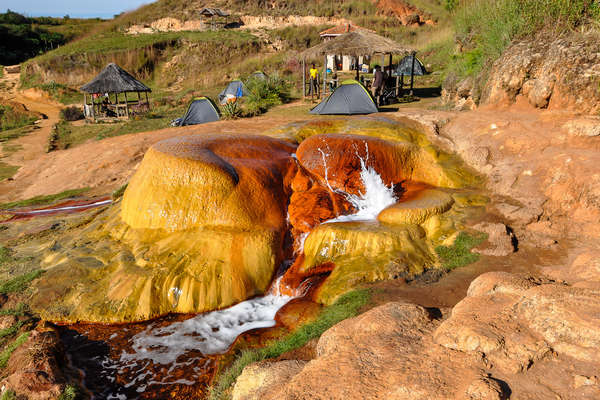
Your nights camping will be spent in 3-man tents shared between 2 riders. A shower and toilet tent will also be set up for the camp.
You will spend 2 nights in bed and breakfast style accommodation - a room for 2-4 people with a private bathroom.
For your remaining nights, you will stay in 2* standard hotels in double rooms with private bathrooms.
Meals
Your meals will be had around a camp fire in comfortable chairs. During your lunchtime picnics and dinners, you will enjoy varied and quality Madagascan cuisine.
Climate
The area surrounding Antananarivo has a high altitude tropical climate. Although Madagascar is situated in an intertropical zone, the yearly average temperature is moderated by the effects of the altitude. The climate is marked by its cool and dry winters, from May to October, and mild, rainy summers, from November to April. During the cooler seasons, the temperature rarely falls below 10 °C and in the hot season, it rarely tops 30 °C.
Frosts are rare but not completely unheard of; during June, the morning temperature can drop to 1°C. Days when the sun doesn't make an appearance are equally as rare - less than ten sunless days per year!
Tips
Tipping is customary in Madagascar, especially within the tourism industry. Any tip you leave will be split between the porters at the airport and in your accommodation, your waiters/the grooms, drivers and camp helpers, the cook and their assistant.
An acceptable tip would be around 20000 Ariary (£5.70 - £8) each day for the driver and for the guide. For the porters, waiters/ waitresses and other staff 2000 to 100000 Ariary (80p - £4) per worker. These amounts are just a suggestion and any tips left are at your own discretion.
Packing list
Head
- A riding helmet is compulsory and we recommend that you take your own to ensure a correct fit. Helmet makers (GPA, HKM, LAS Helmets, Lamicell, Troxel, Equithème) now offer horse-riding helmets that are ventilated, strong, light and comfortable. You also have the option of buying protective shells to go under your hats (Ranch & Rider, Lexington Safety Products) or western hat helmets (Troxel).
- Sunhat (indispensable under the African heat)
- Sunglasses with high protection lenses - with a cord attached so they don't fly off when riding
- Buff or bandana for protecting your neck and face from the sun, wind or rain
Upper body
- T-shirts in cotton and long-sleeved shirts (to protect against the sun) or t-shirts made from rapid-dry material
- 1 lightweight fleece or jumper
- 1 lightweight waterproof jacket made from Gore-Tex or a similar material that is waterproof and breathable
Legs
- 2 pairs of lightweight, comfortable riding trousers or jodhpurs - we recommend riding in them at home before taking them on holiday to ensure they don't rub
- 1 change of riding trousers or jeans
- A swimming costume
- Non-irritant cotton or synthetic underwear
Hands and Feet
- 1 pair of comfortable riding or walking boots. We recommend short boots with half-chaps specifically for riding. We don't recommend taking your favourite leather boots in case they get damaged
- Lightweight shoes or trainers for the evenings
- Several pairs of socks
- Gloves - your hands are particularly exposed to the sun, wind or rain whilst riding
Nightwear
- Tents, sleeping bags and mattresses are provided. We recommend you bring a sleeping bag liner.
Other useful items
- Travel bag 60-80 litres (hold luggage)
- Travel bag 25-30 litres (cabin bag)
- Water bottle (1.5 litres or 2 equivalent)
- Headtorch or small torch for moving around at night - bring spare batteries and bulbs
- Toiletries
- Protein or cereal bars for the longer stretches of riding
- Swiss army knife or equivalent (in checking-in luggage!!)
- Small plastic bags for your rubbish
- Ear plugs (may be useful)
- Camera and high capacity memory card. Spare battery
- A pair of binoculars
Medical kit - our recommendations
Make sure any allergies (to medication or otherwise) and clearly stated in your medical kit. A group pharmacy will also be provided.
- Any medication you regularly take
- Painkillers
- Imodium or similar anti-diarrhea medication
- Vitamin C tablets
- Sunscreen and lip balm - should be high factor
- Insect repellent
- Eye drops
- Hydrating/ soothing cream
- Plasters
- Blister plasters in case of any rubs
- Antiseptic cream, plasters, aspirin, anti-histamine, insect-bite salve etc..
- 10cm wide bandage
- Spare prescription glasses/contact lenses
- Re-hydration sachets
- Antiseptic wipes
- Handwash gel
In your hold luggage
- Any liquids, such as shampoo, moisturiser, deodorant over 100 ml and all bottles can be decanted into small, clear, plastic Ziplock bags. We recommend biodegradable washing products where possible.
- We recommend taking a copy of your passport and insurance documents with you in case you lose your originals
- In your hand luggage carry any valuables, such as your camera, ipod, ipad etc.
- We recommend travelling in your riding boots and carrying your hat and some riding clothes in your hand luggage - then if your luggage goes astray you are still able to ride!
Our Recommendations
- Backpacks cannot be worn whilst riding. We recommend a small bumbag or a coat with pockets so that you can carry small items with you during the day (camera, sunscreen, lip balm etc)
- If you wish to travel 'light' and wash your clothes throughout the ride, please bring with you laundry detergent that is biodegradable
- All waste that could be considered toxic (batteries, aerosols, batteries, empty cream tubes, film) needs to be kept with you and transported back to the UK, where recycling is done well and efficiently. Avoid, wherever possible, to bring with you unnecessary packaging