Comfort
- For the 2 nights in Ulaanbaatar, you will stay in a hotel with private bathrooms and wifi.
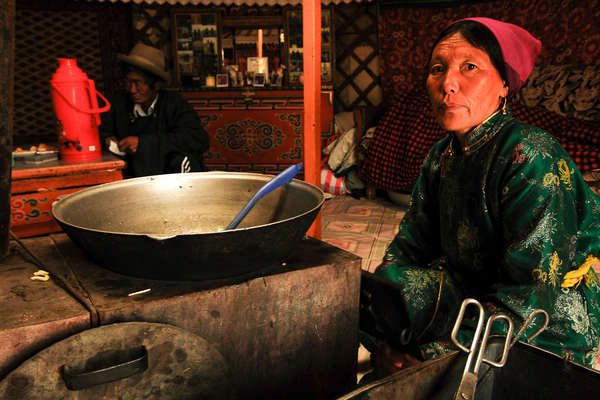
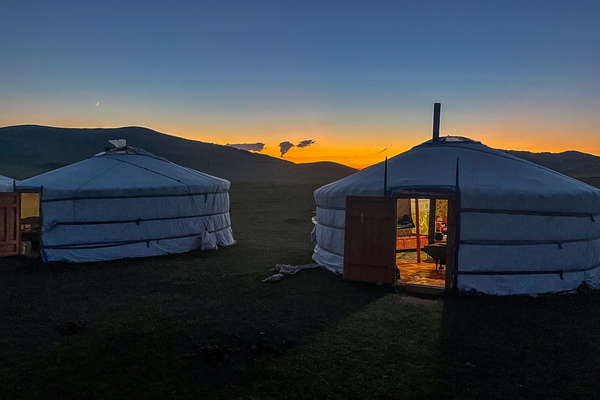
- For 9 nights, you will be hosted by local families. You will sleep in yurts with other guests, separate from the family. There are 3-5 beds in a yurt. There are no shower facilities but you will have the chance to bathe in lakes and rivers. Toilets are typically compost toilets or holes in the ground.
- You will spend 1 night in a tourist camp, sleeping in yurts with 3-6 beds. There are toilets, showers and a dining area at the camp. You will also be able to shower on Day 10 at the Tsagaan Sum Hot Springs.
Please note:
Yurts may be mixed between male and female guests.
When staying with local families, beds vary in comfort. You will need to bring your own sleeping bag and camping pillow.
There is no electricity throughout the ride. We recommend bringing a good solar charger or power bank. You will also be able to charge your devices in the support vehicle on driving days.
Meals
Meals are overall simple, and consist mainly of meat and some vegetables. Most dinners will be prepared by the Mongolian families who are hosting you, except on the camping night when meals will be prepared by a member of the local team. Vegetarians can be catered for, but please note that nomadic families have a limited amount of vegetables and don't tend to use many spices. Vegetarians are advised to bring some additional food or ingredients to supplement their meals.
Water:
Do not drink from unknown sources. You will be supplied with fresh water to drink. You may also bring water-purification tablets such as Micropur.
Climate
Mongolia enjoys over 260 sunny days a year and experiences very little rainfall. However, summer brings the most precipitation. The country often sits at the centre of a high-pressure system, keeping the skies clear most of the year, earning it the nickname "The Land of Blue Skies."
Despite the sunshine, Mongolia experiences an extreme continental climate due to its geographical features: a vast, semi-desert plateau averaging over 1,500m in altitude. Summer temperatures can fluctuate wildly, ranging from +3°C to +35°C during the day and from -3°C to +6°C at night.
Recommendations:
• Wear loose, comfortable, and warm clothing (fleece jackets are ideal).
• Bring t-shirts for layering, which allows you to adjust your temperature more easily.
• Always carry full rain protection, as weather can change quickly.
Tips
If you are happy with the service you receive from your local guides and driver then you may wish to leave a tip. In order to remain consistent with their standard of living, we would recommend something in the region of $65-75 / £50-55.
Packing list
Please pack carefully and sensibly: the following guide is here to give you an idea of what to bring. When packing, please use a soft sided case/bag which can easily be transported. A support vehicle will carry your luggage for most of the ride so there is no weight limit as such, but we recommend approximately 20kgs. Please remember that the region can be cold and the weather extremely changeable -- please bring layers and rain gear. We recommend that you pack essentials in your hand luggage - such as your sleeping bag, towel and sanitary products (within allowance), rain jacket and riding gear -- just in case your luggage is delayed.
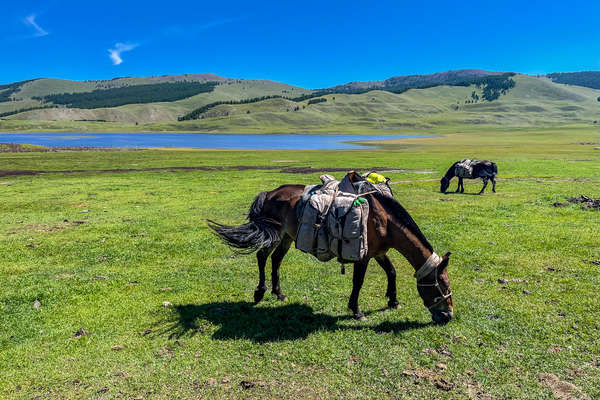
Please note: you will need to separate your belongings and pack a small bag (we'd recommend a dry bag) for days 5-7 when you visit the Naiman Nuur lakes (max 8-10kg), as the luggage will be carried by pack horses. You can leave the rest of your luggage in the support vehicle and pick it up later.
Head
- Equus Journeys strongly recommend that you wear a riding helmet and that you take your own to ensure a correct fit. There are many lightweight options available nowadays
- Sunhat for when not riding
- Sunglasses - with a cord attached so they don't fly off when riding
- Buff or bandana
- Warm hat for cold nights
Upper body
- Thermals (long or short sleeved)
- Long sleeved shirts provide protection from the sun and are an extra layer
- T-shirts
- Lightweight fleece or jumper
- Warm fleece or jumper (and a spare in case one gets wet)
- Warm and waterproof jacket - it can rain at any time of year and the evenings can be particularly cold. No ponchos or anything that can flap around!
Legs
- Lightweight, comfortable riding trousers or jodhpurs - we recommend riding in them at home before taking them on holiday to ensure they don't rub
- Thermals
- Casual trousers for the evenings, such as jeans or tracksuit bottoms
- Waterproof over trousers
Hands and Feet
- Comfortable riding boots. We recommend short boots with half chaps but you may wish to take long chaps as an extra layer against inclement weather. We don't recommend taking your favourite long leather boots in case they get damaged. We would suggest something with a good grippy sole.
- Waterproof shoes/boots can be useful for abundant dew in the mornings or when it rains
- Trainers or equivalent light shoes for moving around in the evenings
- Several pairs of warm, thick socks
- Gloves - your hands are particularly exposed to the sun, cold or rain whilst riding. Waterproof gloves can be particularly useful
Nightwear
- Sleeping bag. You need at least a comfort factor down to minus 5°C, but would recommend at least minus 8 or 10°C (especially outside of July/August). It is possible to request a sleeping bag from the local team (limited availability)
- Sleeping bag liner - silk, cotton or fleece - adds an extra layer
- Pyjamas or tracksuits or thermals for sleeping in
Please remember it can get very cold at night, especially if you are travelling in June/September: pack accordingly.
Other useful items
- Water-purification tablets
- Swimsuit - for swimming/bathing in lakes
- Towels - camping ones will both dry and pack more easily
- Small backpack for accessing items required during the day (carried by support crew)
- Camera and high capacity memory card. Spare battery
- Bumbag for carrying your camera and small items whilst riding
- Headtorch or small torch for moving around camp at night - bring spare batteries and bulbs
- Water bottle (2 litres or 2 x 1 litre)
- Wet Wipes or equivalent (for when washing facilities aren't available)
- Small plastic bags for rubbish
- Ear plugs (for light sleepers)
- Solar charger/powerbank
Medical kit
- Micropur tabs
- Sunscreen and lip balm - should be high factor
- Insect repellent, preferably containing deet
- Any medication you regularly take
- Blister plasters in case of any rubs
- Antiseptic cream, plasters, aspirin, anti-histamine, insect-bite salve etc...
- Spare prescription glasses/contact lenses
- Eye drops
- Imodium or similar anti-diarrhoea medication
- Re-hydration sachets
- Water purification tablets
- Antiseptic wipes
- Handwash gel
Gifts for local families
Mongolian tradition wants the traveller to thank his host for his kind hospitality by offering small gifts. Some ideas for gifts include fresh vegetables and fruits (to be bought on the way), cakes or sweets (from home or bought locally), other local products/specialities from your home country, toys or books for children, kitchen utensils or camping accessories. You may also wish to take some photographs or postcards of your home with you to show your hosts.
Please avoid offering soaps, pens, or used clothes.
Other recommendations:
- Please print copies of your passport and insurance documents and take them with you.
- Backpacks should not be worn whilst riding. We recommend bringing a small bumbag or a coat with pockets so that you can carry small items with you during the day (camera, sunscreen, lipbalm etc). The guides will carry saddle bags carrying water.