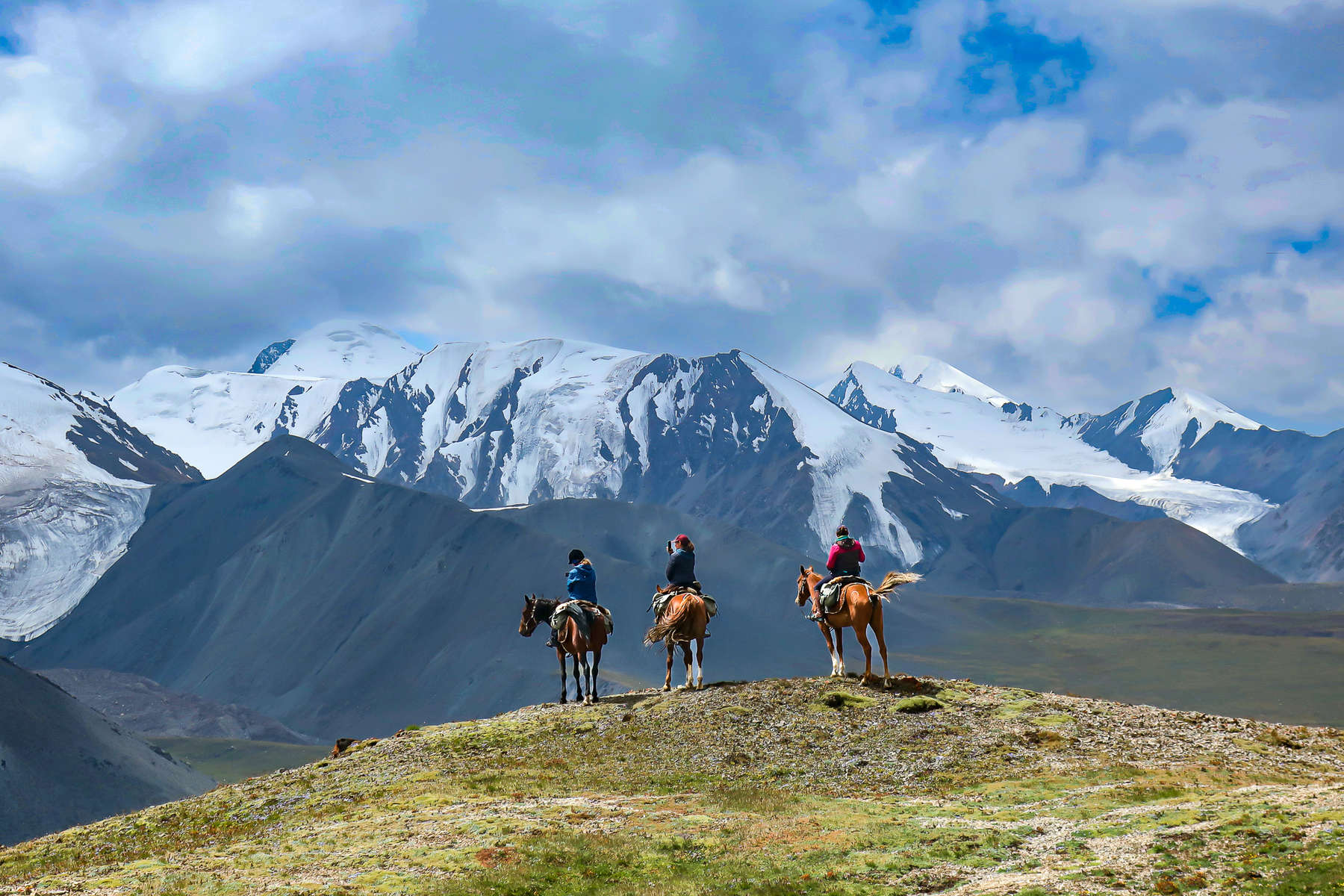
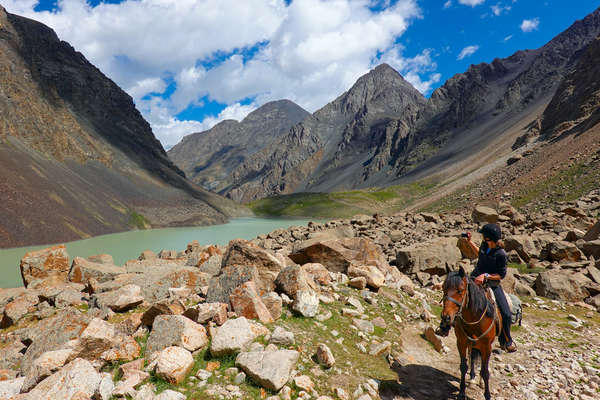
From the horse’s mouth
Itinerary
Highlights
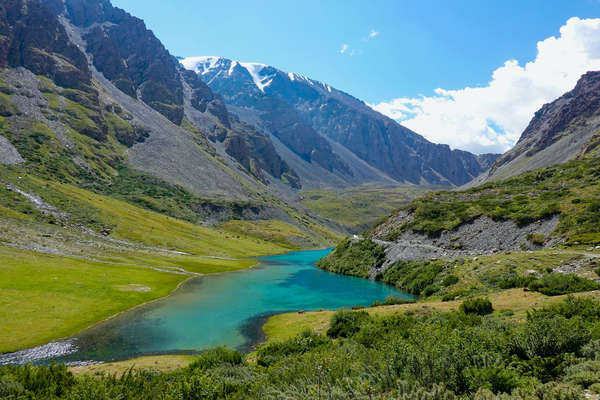
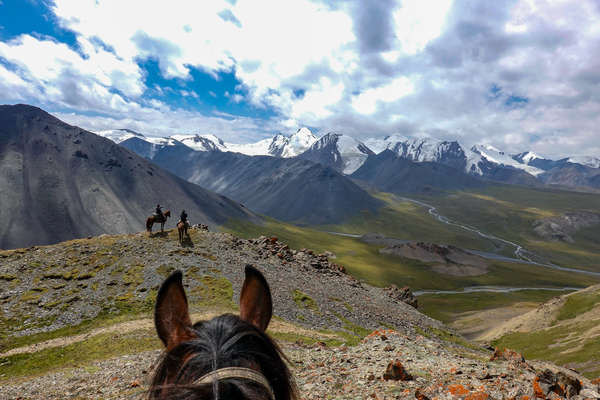
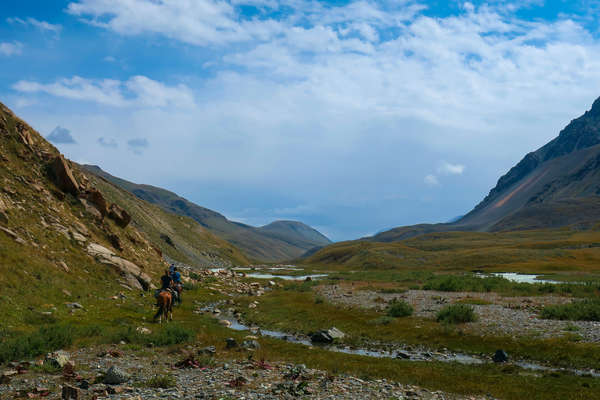
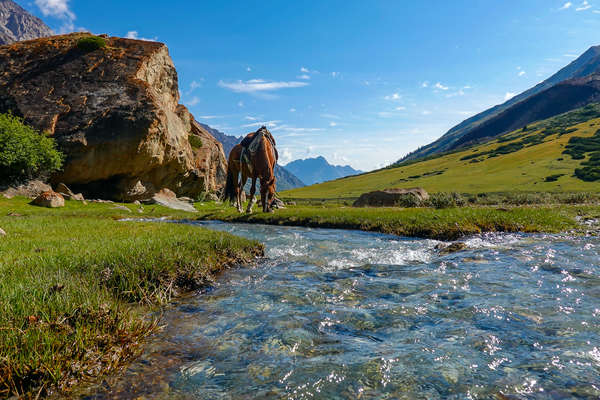
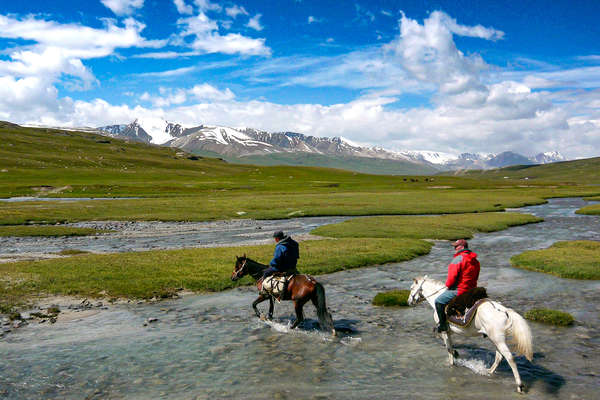
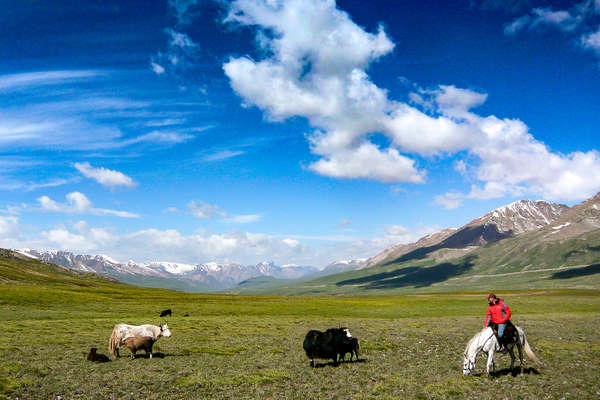
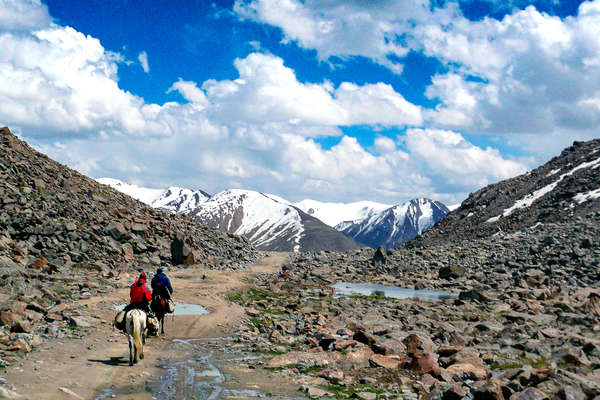
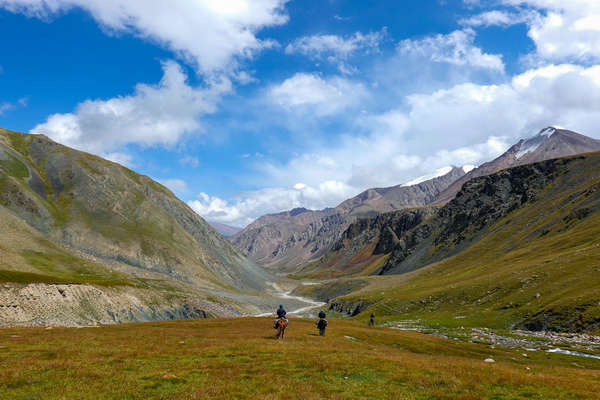
- Follow part of the Silk Road to China, through valleys forged by ancient glaciers
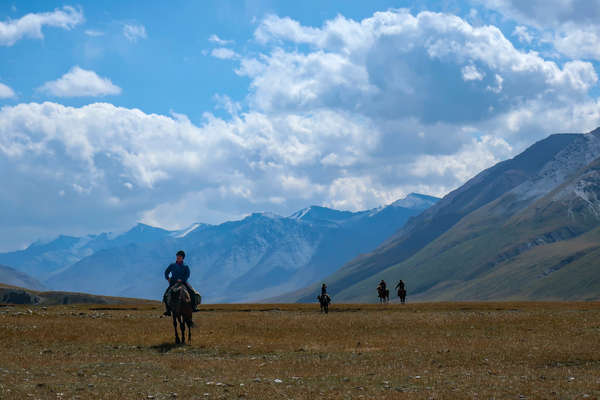
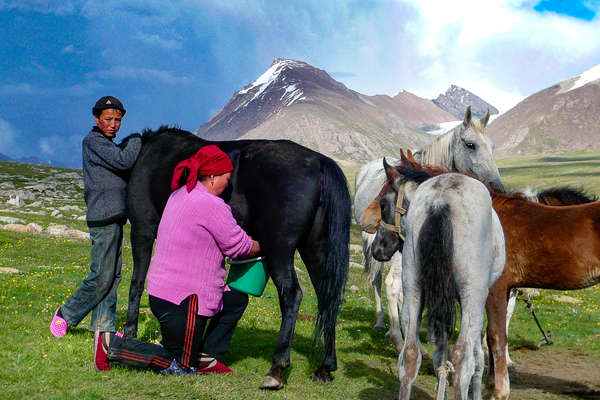
- Experience the semi-nomadic traditions of local Kyrgyz herders and be welcomed into their yurts
- A 100% Kyrgyz team who have invested in local development initiatives and ecotourism projects
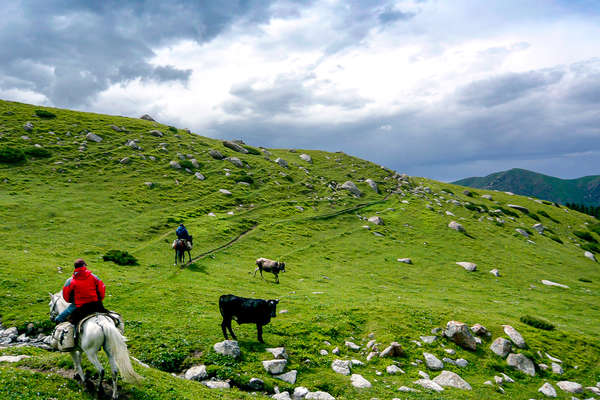
- The varied and exceptionally rich flora of the Tien Shan mountain pastures
Dates & prices
Price details
- Rates are per person, based on two riders sharing a twin or double room or tent during the ride.
- Groups are composed of a minimum of 5 riders and a maximum of 6 international riders, plus guides.
- The ride will confirm for 3-4 riders on payment of a small group supplement of €125 / £110 / $150 per person.
- Airport transfers are included if arriving before 7am (riders arriving early may have to wait). On departure, a fee of €30 is payable for a private airport transfer if your flights are different from most of the group.
- There is no single supplement and you must be prepared to share. The only exception is in Bishkek when it is possible to request a single room in the hotel (please contact us for rates). In exceptional circumstances and depending on the group size, it may be possible to request a private tent at an extra cost.
- Rider weight limit is 85 kg / 187 lbs / 13 st 5 lbs. Heavier riders may be accommodated depending on horse availability, but must notify us before booking.
Please Note
The itinerary may be modified at anytime for security reasons, meteorological or events beyond our control such as blocked roads, rivers in flood, drought, strikes and local holidays. Equus Journeys, our local partners and their local guides will always strive to find the best solution and will alter the itinerary as needed.
The names of the hotels and accommodation are given for information only and depending on availability, they may be modified without notice and replaced by another of a similar standard.
Price includes
Support Team
1 kyrgiz expedition leader
Logistic
1 cook
Inland transports
Accommodation
Meals
Price doesn't include
Meals
Dinner on Day 13 in Bishkek
Insurance
Visa fees
International flights
Airport transfers if your flights are different from most of the group
Extra
Tips to local team
Optional
Accommodation
Extra night in Bishkek (please contact us for rates)
Equestrian info
Horses
Guide & local team
Minimum riding ability
Rider weight limit is 85 kg / 187 lbs / 13 st 5 lbs. Heavier riders may be accommodated depending on horse availability, but must notify us before booking.
Pace
Tacking ability and participation
Trip conditions and Requested experience
You should be prepared for extremely changeable weather and the mountains could show you rain, hail, snow, wind and sun all within 24 hours
Your luggage will be transported by car during the trip.
Previous experience of riding a trail of several days is a definite advantage but is not required. Riders who do not ride regularly are requested to get riding fit prior to the start of their holiday.
The team has a satellite phone for emergencies.
Visiting a new country offers the opportunity to meet other cultures with different mentalities, therefore it is important to accept these differences and respect the local way of life.
Equestrian equipment
Helmets are mandatory. Please bring your own to ensure a proper fit.
You should wear hiking/riding boots as there may be some sections where you will need to dismount and lead your horse. Please ensure these are suitable for riding.
The local team will provide saddle bags for your belongings, but you should bring plastic or waterproof bags to protect them.
Travel info
Comfort
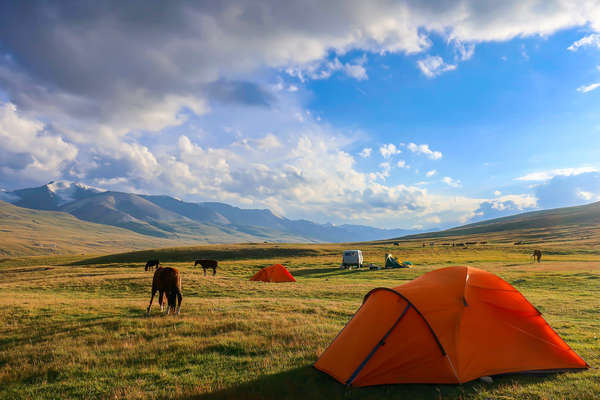
In Barskoon you will share a room or yurt.
In Bishkek you stay in double or triple rooms with private bathrooms.
Meals
Breakfast consists of eggs, bread, cheese and dried fruits.
Lunch is a picnic and consists of bread, cheese, meat, fruit and chocolate.
Dinner often starts with a hot soup followed by a main of meat, salad, pasta, rice and followed by cheese, fruits or chocolate.
Climate
In Bishkek and at low altitudes it can be hot and dry, but in the mountains and at altitude you can experience many variations. It can be warm during the day but the temperature will drop to around zero or below at night. You could experience rain, hail or even snow as well as wind but the bad weather rarely lasts long. The area actually reports low rainfall throughout the year but you should be prepared with many warm layers and waterproof clothing.
Tips
Packing list
We also recommend bringing waterproof hiking/riding ankle boots that you can wear with half chaps, as there may be some sections where you will need to dismount and lead your horse downhill (and normal riding boots won’t provide enough grip). Please ensure these are suitable for riding, with ankle support and a small heel.
Head
- Helmets are mandatory on the ride. Please bring your own to ensure a correct fit.
- Sunhat for when not riding
- Sunglasses - with a cord attached so they don't fly off when riding
- Buff or bandana
- Warm hat for cold nights when camping
Upper body
- Thermals (long or short sleeved)
- Long sleeved shirts provide protection from the sun and are an extra layer
- T-shirts
- Lightweight fleece or jumper
- Warm fleece or jumper (and a spare in case one gets wet)
- Warm and waterproof jacket - it can rain at any time of year and the evenings can be particularly cold
- Swimming costume - for swimming/bathing in rivers/hot springs
Legs
- Lightweight, comfortable riding trousers or jodhpurs - we recommend riding in them at home before taking them on holiday to ensure they don't rub
- Thermals
- Casual trousers for the evenings, such as jeans or tracksuit bottoms
- Waterproof over trousers
Hands and Feet
- Comfortable riding/hiking boots - as above
- Additional waterproof shoes/boots if needed
- Trainers or equivalent light shoes for moving around the camp in the evenings
- Several pairs of warm, thick socks
- Gloves - your hands are particularly exposed to the sun, cold or rain whilst riding. Waterproof gloves can be particularly useful
Nightwear
- Sleeping bag. You need at least a comfort factor down to minus 15 celsius.
- Sleeping bag liner - silk, cotton or fleece - adds an extra layer
- Sleeping mattress (Therm-A- Rest mats are inflatable, warm and light)
- Pyjamas or tracksuits or thermals for sleeping in
Other useful items
- Towels - camping ones will both dry and pack more easily
- Small backpack for accessing items required during the day (carried by support crew)
- Camera and high capacity memory card. Spare battery
- Bumbag for carrying your camera and small items whilst riding
- Headtorch or small torch for moving around camp at night - bring spare batteries and bulbs
- Water bottle (2 litres or 2 x 1 litre)
- Swiss army knife
- Field glasses
- Wet Wipes or equivalent (for when washing facilities aren't available)
- Toilet paper and a lighter to burn it with
- Small plastic bags for rubbish
- Ear plugs (for light sleepers)
Medical kit
- Any medication you regularly take
- Sunscreen and lip balm - should be high factor
- Insect repellent, preferably containing deet
- Blister plasters in case of any rubs
- Antiseptic cream, plasters, aspirin, anti-histamine, insect-bite salve etc...
- Spare prescription glasses/contact lenses
- Eye drops
- Imodium or similar anti-diarrhoea medication
- Re-hydration sachets
- Water purification tablets
- Antiseptic wipes
- Handwash gel
- Micropur tablets to purify water
Other recommendations:
- Backpacks cannot be worn whilst riding. We recommend a small bumbag or a coat with pockets so that you can carry small items with you during the day (passport, camera, sunscreen, lipbalm etc)
- We recommend travelling in your riding boots and carrying your hat and some riding clothes in your hand luggage - then if your luggage goes astray you are still able to ride!
- Tall riders may benefit from taking a pair of long stirrup leathers with them (the local stirrups are adjustable but are sometimes limited in length)
- We recommend taking a copy of your passport and insurance documents with you in case you lose your originals
- Please take your rubbish home with you. There are no recycling facilities in Kyrgyzstan, so take your used batteries, aerosols etc back home and dispose of them appropriately. Try to leave excess packaging material at home before travelling
Sustainable tourism
- Travel light. It's a little known fact, but the lighter you pack, the better for the environment as heavy bags will produce higher emissions (when flying a plane or driving a car!).
- Reduce plastic waste. Take your favorite reusable bottle with you. Avoid single-use bags, cups, or straws.
- Preserve nature. Always take your rubbish with you during the ride and recycle them. Leave all the flowers or plants as you found them, and never get too close when observing wildlife. Make sure to use eco-friendly products such as body wash or laundry detergent (if camping) to protect both your skin and the environment.
- Choose your experiences carefully. Respect animal life by not participating in any activities that abuse wild animals (shows, elephant rides, etc.).
- Support local populations. Buy local handicrafts, be respectful of customs, and learn about the culture of local communities.
- Share! Raise awareness among your family and friends about sustainable tourism.
Did you know?
Did you know?
The Kyrgyz horse
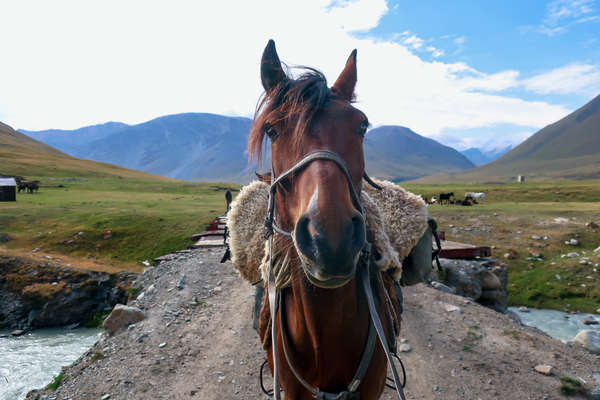
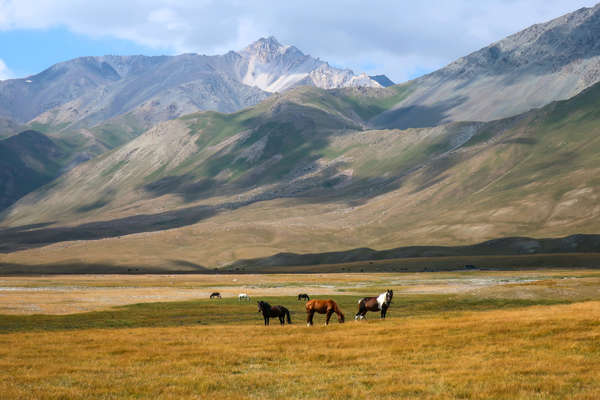
The Kyrgyz horse is a cross between the "celestial horses", often praised in the ancient texts, and different Russian breeds or thoroughbreds.
This breed, that contributed to the kyrgyz identity for so long, had disappeared.
Top level rider and journalist Jacqueline Ripart travelled all around the world to study horses. Her curiosity led her to seek out the forgotten horses and equestrian culture. It is her persistence that led to the rehabilitation of the kyrgyz horse.