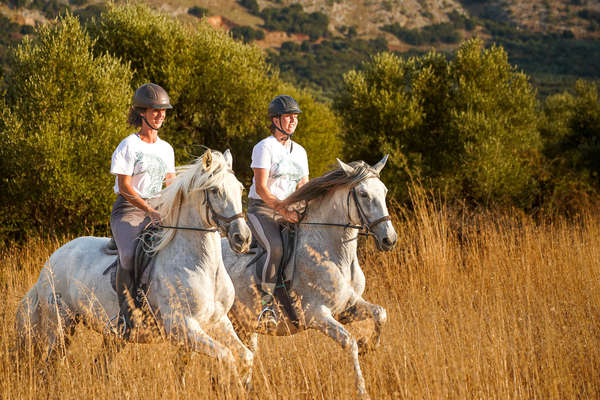
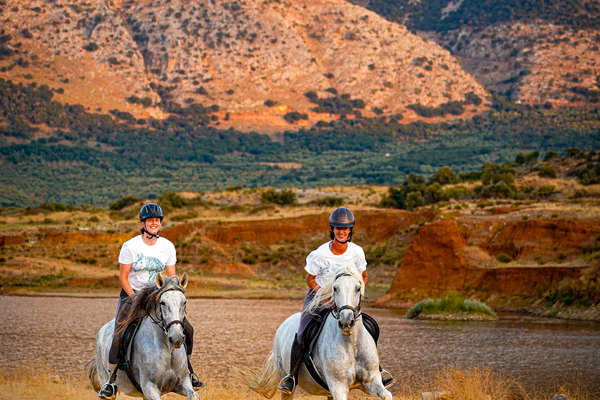
Comfort
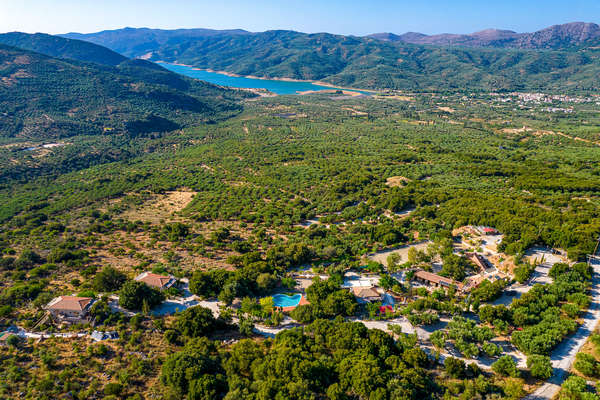
You will be staying in a countryside hotel.
The 12 en-suite rooms are spacious, with beautiful views over the valley. All rooms have a large private balcony or patio with garden. There is a pool available for all guests.
WiFi is available.
Laundry services are available (paid locally).
Meals
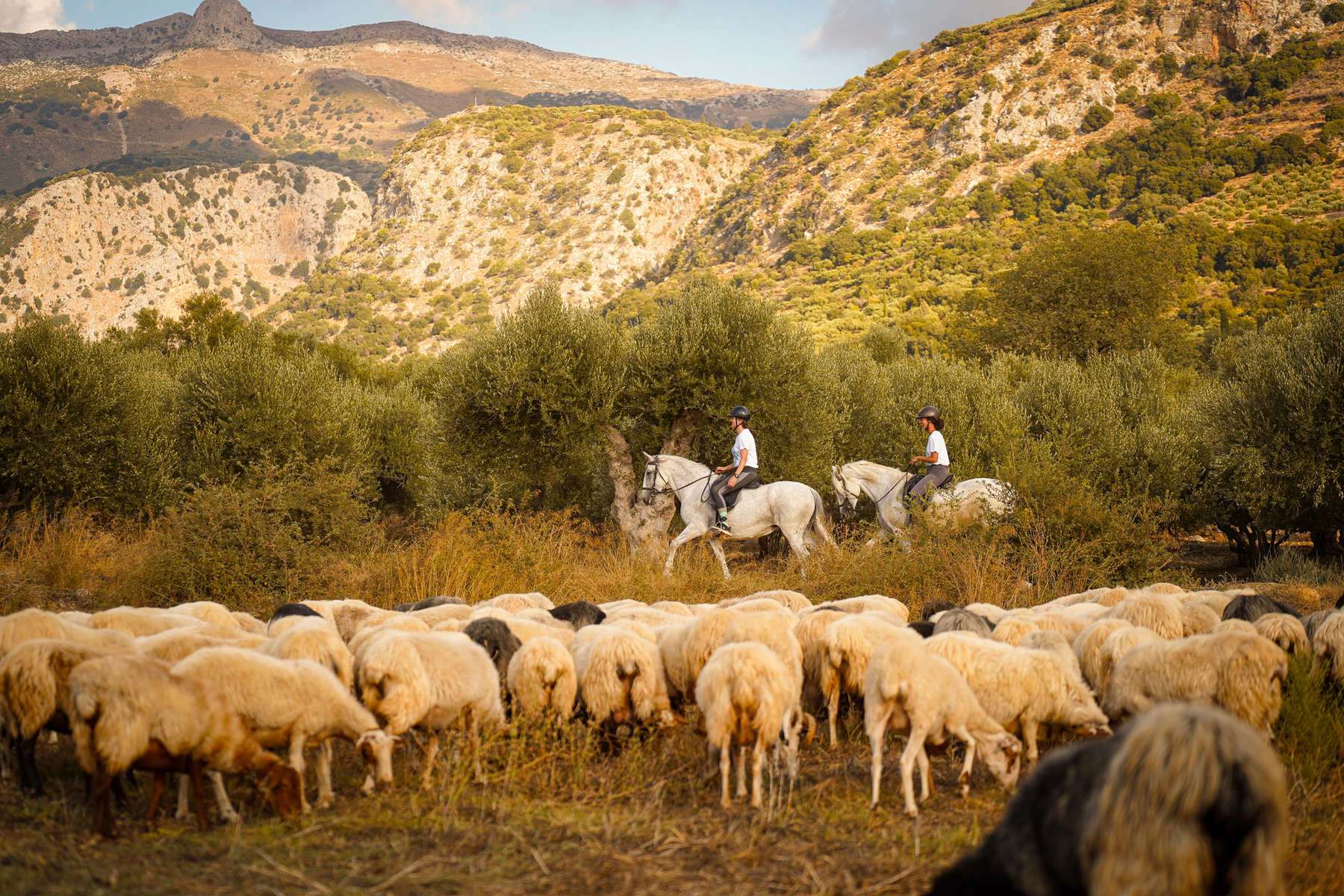
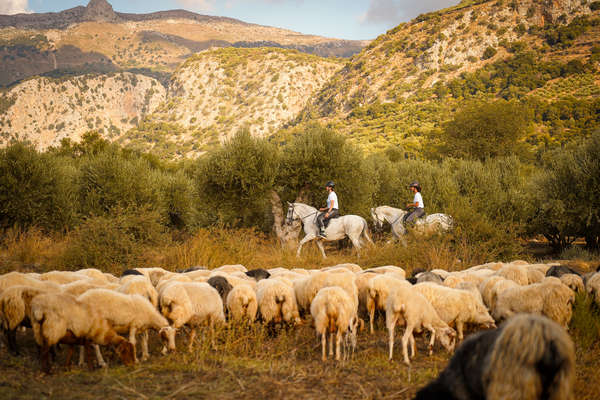
The restaurant at the main hotel only uses fresh ingredients and local products. The restaurant has its own vegetable, herb and fruit gardens providing guests daily with new seasonable ingredients. Some of the local produce used in the restaurant also includes meat from free-ranging goats and sheep from neighbouring farms, cheese made by the local shepherd, homemade raki and honey from a local beekeeper.
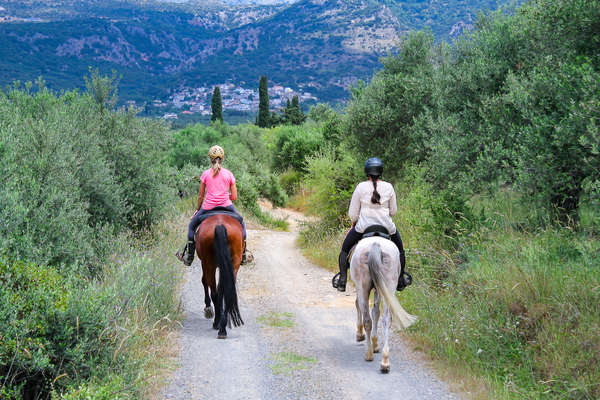
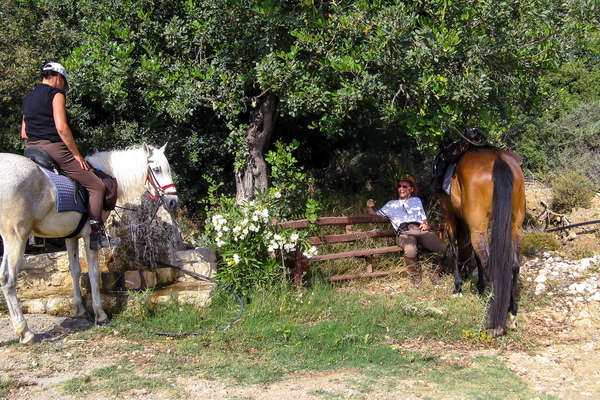
Lunches can be picnic lunches carried in your saddlebag.
Dietary requests can usually be accommodated if mentioned in advance - please inform your travel advisor upon booking.
Climate
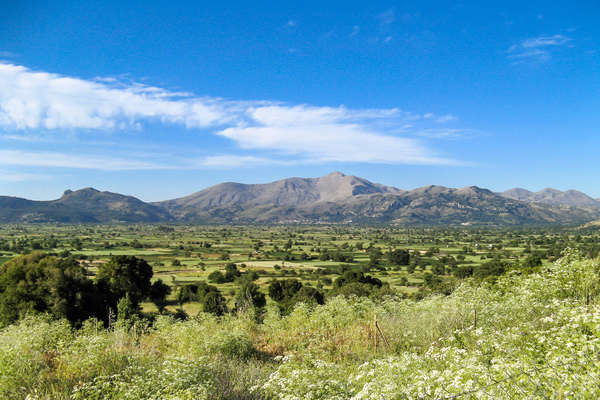
Crete, the largest Greek island, has a Mediterranean climate, with mild, rainy winters and hot, sunny summers.
The bulk of the rain falls from October to March; in summer, it almost never rains. In winter, but also in spring, it can snow in the mountains, the highest of which is Mount Ida, 2,456 meters (8,058 feet) high.
In winter, from December to mid-March, temperatures are generally mild. For its southern location, Crete is less exposed to cold spells than other Greek islands, however, the temperature can drop at night. Springs and summers are warm to hot (up to 30°C), and very sunny with virtually no rain.
Tips
Tips are left to your discretion and are not mandatory. We recommend around €40/£35 per rider for the week, to be divided between the team.
Packing list
Please pack carefully and sensibly: the following guide is here to give you an idea of what to bring. This list must be adapted depending on the season and individual needs.
Head
- Helmet
- Sunhat for when not riding
- Sunglasses - with a cord attached so they don't fly off when riding
Upper body
- Long sleeved shirts provide protection from the sun or extra warmth
- T-shirts
- Lightweight fleece or jumper
- Waterproof jacket (Spring/Fall)
Lower body
- Lightweight, comfortable riding trousers or jodhpurs
- Casual clothes for the evenings (jeans or walking trousers)
- Swimming costume
- Non-irritant cotton or synthetic underwear
Hands and Feet
- Comfortable riding boots. We recommend short boots with half chaps.
- Lightweight shoes or trainers for the evenings
- Several pairs of warm socks
- Gloves
Other useful items
- Water bottle
- Ear plugs
Medical kit
- Any medication you regularly take
- Painkillers
- Imodium or similar anti-diarrhea medication
- Vitamin C tablets
- Sunscreen and lip balm - should be high factor
- Insect repellent
- Eye drops
- Hydrating/ soothing cream
- Plasters
- Blister plasters in case of any rubs
- Antiseptic cream, plasters, aspirin, anti-histamine, insect-bite salve etc..
- 10cm wide bandage
- Spare prescription glasses/contact lenses
- Re-hydration sachets
- Antiseptic wipes
- Handwash gel
Our Recommendations
- Backpacks cannot be worn whilst riding. We recommend a small bumbag or a coat with pockets so that you can carry small items with you during the day (passport, camera, sunscreen, lipbalm etc)
- We recommend travelling in your riding boots and carrying your hat and some riding clothes in your hand luggage - then if your luggage goes astray you are still able to ride!
- You should also bring a copy of your passport/insurance in case you lose your documents. You can also save a copy into your mobile phone.