Crossing the Andes - Argentina to Chile

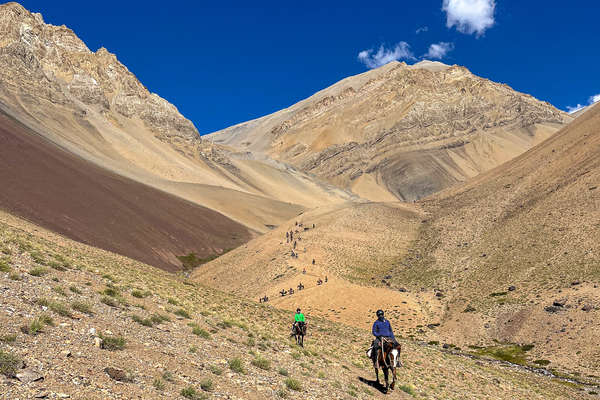
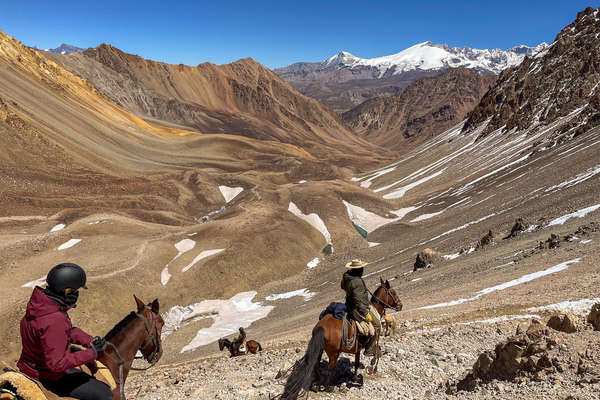
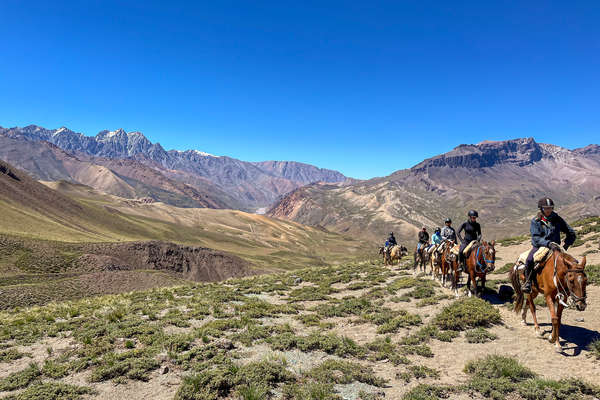
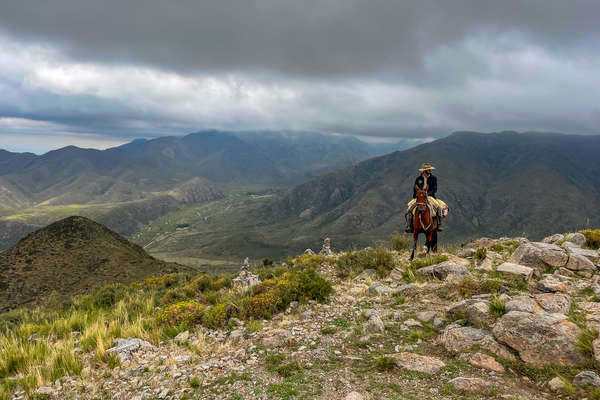
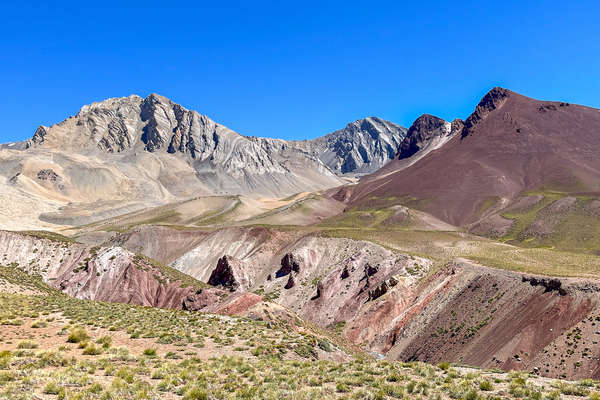
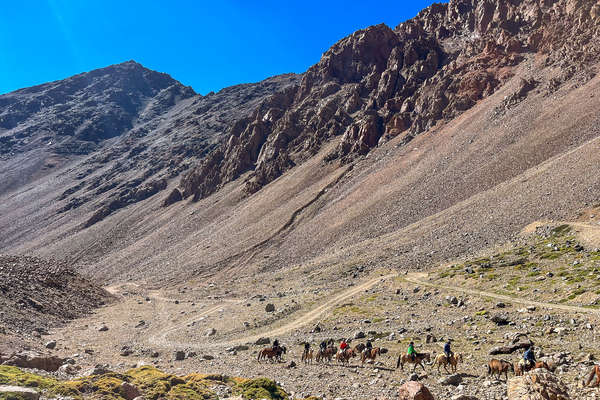
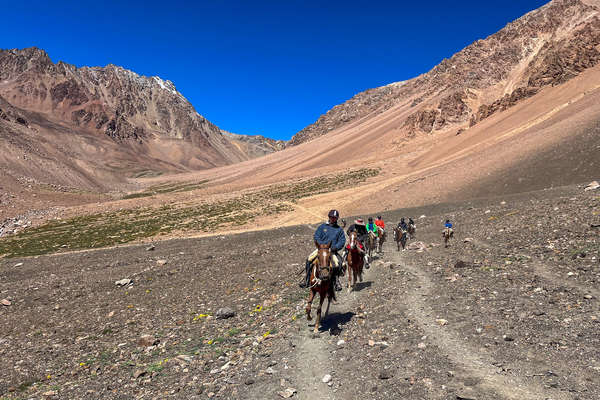
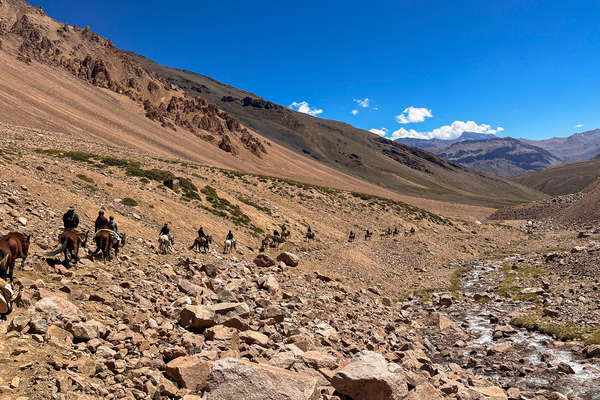
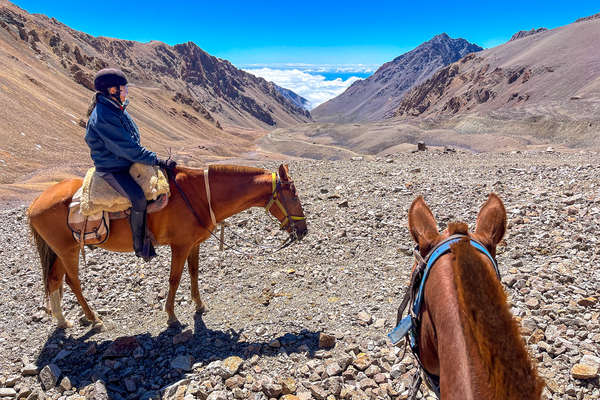
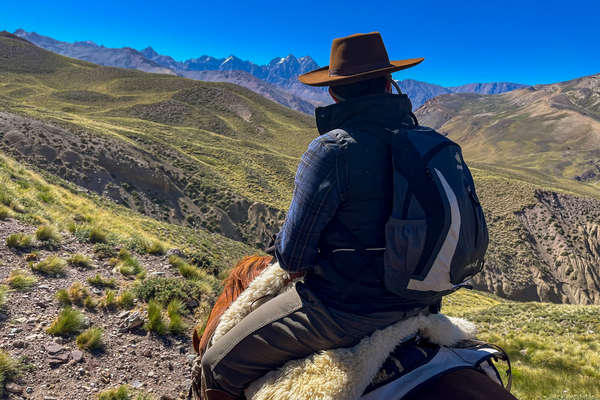
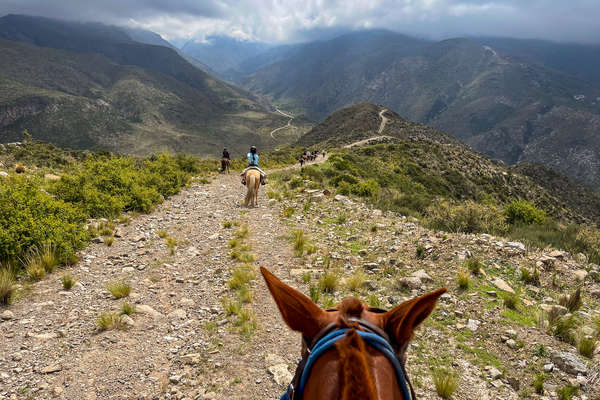
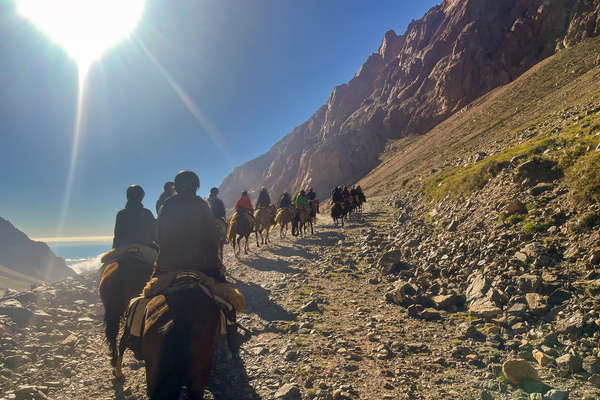
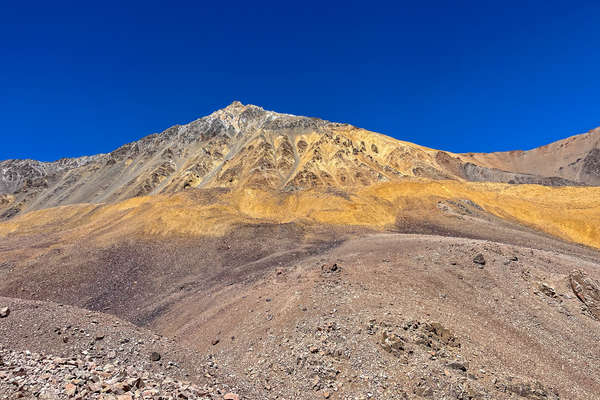
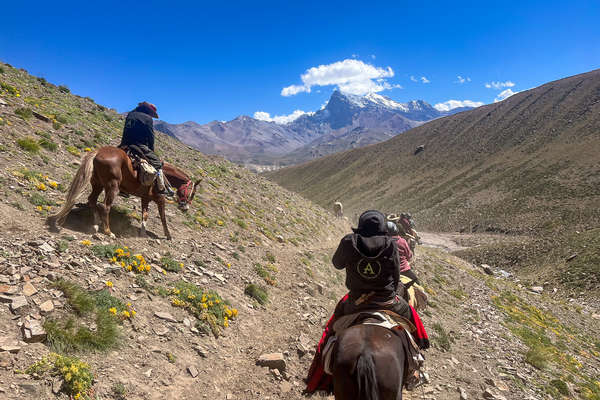
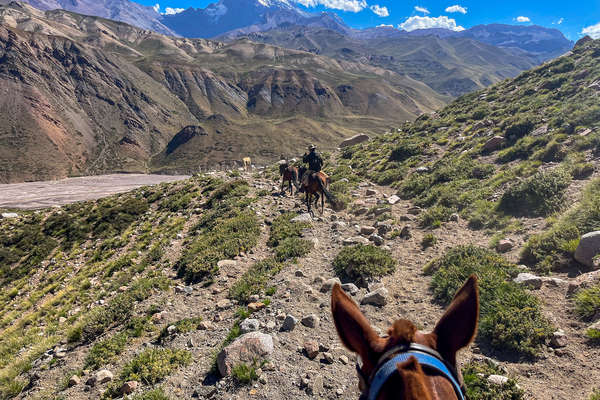
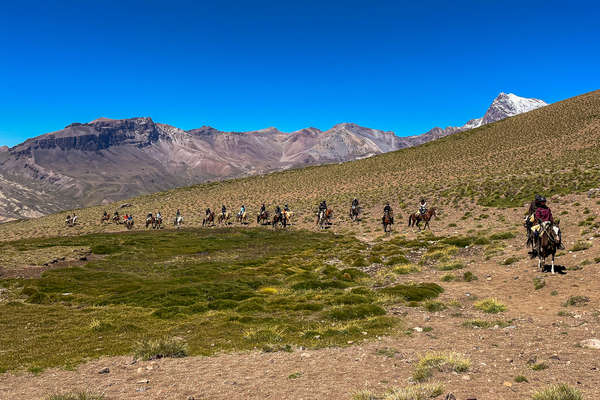
Join the expedition of a lifetime when you sign up to cross the Andes mountains on horseback. The adventure begins in Mendoza, Argentina's wine country. You'll then head to the foothills of South America's highest peaks, to acclimatise and get to know your horse. From here, you will ride west from Argentina towards Chile, first crossing the imposing “Argentine Portillo” with stunning views of the cordillera, and later the “Portillo de Piuquenes”, a high mountain pass which connects the two countries and was used by Argentine General San Martín during his liberation campaign. On this breathtaking journey, you will experience a feeling of complete isolation and a sense of awe as you ride among snow-capped mountains and jagged peaks, through sweeping valleys and across fast-flowing rivers, with the chance to spot wildlife such as guanacos, vizcachas and condors along the way. Sleeping in tents for six nights, and riding along narrow mountain paths against strong winds, you will feel your adventurous spirit awakened and your strength of mind tested. An unforgettable trip for adventurous riders.
Book now Print the details for this ride
Pack Trip
9 days (6 riding)
From £3,684
  • Crossing the Andes - Argentina to Chile
  • Crossing the Andes - Argentina to Chile
  • Crossing the Andes - Argentina to Chile
  • Crossing the Andes - Argentina to Chile
  • Crossing the Andes - Argentina to Chile
  • Crossing the Andes - Argentina to Chile
  • Crossing the Andes - Argentina to Chile
  • Crossing the Andes - Argentina to Chile
  • Crossing the Andes - Argentina to Chile
  • Crossing the Andes - Argentina to Chile
  • Crossing the Andes - Argentina to Chile
  • Crossing the Andes - Argentina to Chile
  • Crossing the Andes - Argentina to Chile
  • Crossing the Andes - Argentina to Chile
  • Crossing the Andes - Argentina to Chile
  • Crossing the Andes - Argentina to Chile
  • Crossing the Andes - Argentina to Chile
  • Crossing the Andes - Argentina to Chile

Itinerary

Highlights

- Embark on an incredible, once-in-a lifetime adventure, crossing from Argentina to Chile on horseback through South America’s highest mountain range.
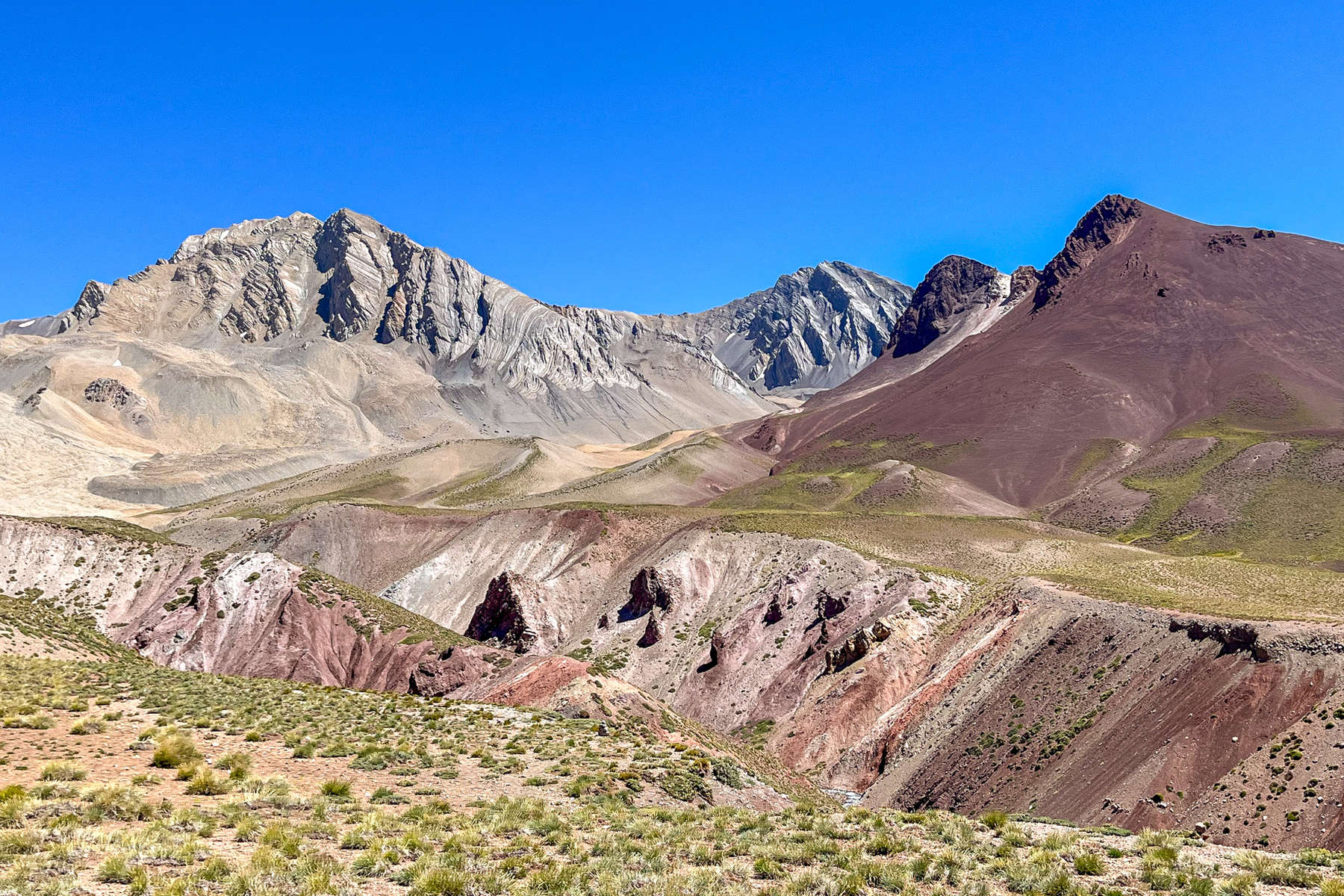
- Experience breathtaking and dramatic scenery in an area that is completely isolated.
- Ride across rugged and varied terrain: walk among snow-capped mountains, down through sweeping valleys, climb steep and narrow paths and cross fast-flowing rivers.
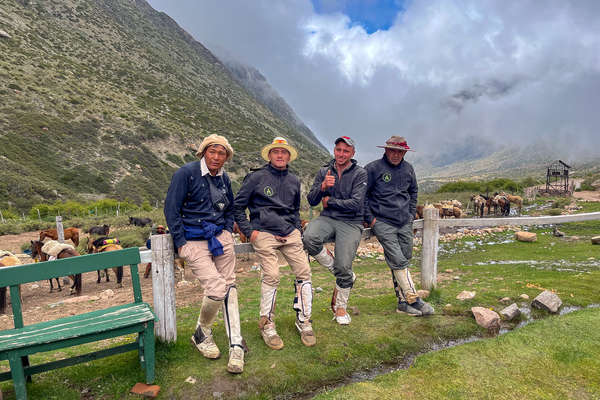
- Travel alongside Argentine baqueanos and learn about the country’s rich culture and history.
- Sleep in tents under the stars for six nights and enjoy a rare chance to reconnect with nature.
- Observe Andean wildlife such as guanacos, vizcachas and condors.
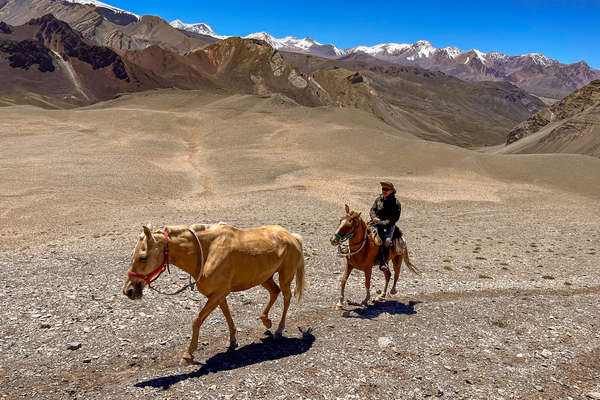
- Enjoy riding strong and sure-footed Peruvian Paso horses, whose additional gait, the paso-llano, is smooth and comfortable.
  • Day 1 1: ARRIVAL IN MENDOZA - No riding

    International flight to Mendoza. (Flights are not included but can be booked upon request).

    The local team will meet you at the airport and transfer you to your hotel in the city. Today is a free day for you to relax and recover from your flight or do some sightseeing. You may also wish to arrive a day or two earlier and book a wine tour (Mendoza is located in the heart of Argentina's wine country). Please ask your travel advisor if you'd like us to book any extra hotel nights for you.

    If you choose to fly in today, you are welcome to arrive at any time. Lunch and dinner are to your own account. Tomorrow, the adventure begins.

    Overnight at the hotel in Mendoza.
  • Day 2 2: EL MANZANO HISTÓRICO (1710m) - 2 hours riding

    After breakfast at the hotel, you’ll be transferred from the city of Mendoza to the quaint town of El Manzano Histórico (in the province of Mendoza, approx. a two-hour drive away) where you’ll meet the rest of the Ampascachi team and the horses.

    After arriving at the refuge, all guests will be given a tent, mattress and sleeping bag (you will need to set up your own tent close to the refuge). Then there will be a welcome toast and an introductory ride so you can get to know your horse. Lunch may be before or after riding. Later, there is an option to take a shower at the nearby public showers, if you wish.

    Dinner and overnight camping at the refuge (1780m).
  • Day 3 3: CAMPO LA ORQUETA (2360m) - 5-6 hours riding

    Today you’ll get ready for a full day of riding to Campo La Orqueta. During the ride, you will experience the vivid landscapes of this mountain region, enjoying the rugged scenery while acclimatising and getting used to your horse and the rocky terrain. After a picnic lunch, you will climb to the top of a mountain along a steep road, which offers beautiful views, but the riding is not for the faint hearted or those with vertigo. At the top, there’ll be time for photos.

    You’ll return to the refuge in the afternoon, and the local team will prepare another delicious meal while you take a shower and relax at camp and organise your luggage for the coming days.

    Dinner and overnight camping at the refuge (1780m).
  • Day 4 4: ESCARAVELLI MOUNTAIN HUT (3170m) - 5-6 hours riding

    After breakfast, you will break camp and the logistics team will pack all the luggage, camping equipment and supplies for your trip over the mountains.

    You will then begin riding west towards Chile, stopping at the Argentine Gendarmerie checkpoint, Alférez de Portiniari, where you will go through customs and border control. Once the necessary admin is completed, you will have lunch at the checkpoint, and then continue riding, climbing higher until you arrive at Escaravelli Mountain Hut (3170m). Here you’ll set up camp and have dinner.

    Please note: there are no toilets or showers available this evening. You will also only have access to your small bag for the trip (your main/big bag has already been packed by the logistics team and will meet you in Chile).

    Overnight camping at Escaravelli Mountain Hut (3170m).
  • Day 5 5: REAL DE LA CRUZ (2870m) VIA THE PORTILLO ARGENTINO (4350m) - 5-7 hours riding

    You will take down your tents again today and get ready for a long and exciting day in the saddle. After breakfast and packing up, you will say goodbye to the logistics team (who will meet you in Chile) and head out with your guides and the gauchos to the imposing Portillo Argentino (4350m), the highest point of the trip. Here, peaks are often covered in snow and you will enjoy stunning views of the cordillera. The mules will follow with the camping equipment and your small bag for the ride.

    You’ll ride over the pass and head slowly down the narrow paths, pausing for lunch at the bottom. You’ll then continue to Refugio Real de la Cruz – a military base built and operated by the
    Argentine army, where the forces are in charge of guarding the borders. Here you will meet the mules and you can choose to set up your tent in the base grounds or to sleep on the floor inside the refuge (in an open, shared room). Once sleeping arrangements have been made, you can have a shower at the base and enjoy a rest while the team prepares dinner.

    Overnight camping at Refugio Real de la Cruz (2870m).
  • Day 6 6: REST DAY AT REAL DE LA CRUZ (2870m) - No riding

    Today is a free day for you to rest and recharge. In the morning, you may want to join a hike or simply relax at camp.

    After lunch, you can read, journal or play games with your fellow riders. There is of course time for a shower and a rest before dinner. Tomorrow, you ride again.

    Dinner and overnight camping at Refugio Real de la Cruz (2870m).
  • Day 7 7: MOUNT SAN JUAN VIEWPOINT (3500m) - 5-6 hours riding

    Today you will ride up to a viewpoint (3500m) from where you can enjoy panoramic views of Mount San Juan (6000m) and the surrounding snow-capped peaks. You will enjoy a picnic lunch with the mountains as the backdrop, and then ride back to Refugio Real de la Cruz, just in time for a shower and dinner..

    Overnight camping at Refugio Real de la Cruz (2870m).
  • Day 8 8: TERMAS DEL PLOMO HOT SPRINGS, CHILE (2990m) VIA PIUQUENES PASS (4042m) - 6-7 hours riding

    Today you'll leave Refugio Real de la Cruz and head to the Chilean border. You will ride through remote and stunning mountain scenery before arriving at Piuquenes Pass (4042m) where you will meet the Chilean baqueanos and your new mounts – the Chilean criollo horses. After a picnic lunch, you will say goodbye to the Peruvian horses and some of the Ampascachi team.

    With your new horse, you will cross the Chilean Portillo and start the descent to Termas del Plomo in the beautiful Valle del Yeso, Chile. The logistics team will be waiting for you there and you’ll enjoy a toast to celebrate the feat of conquering the Andes Mountains together.

    Finally, you'll say goodbye to the Chilean horses and head towards the hotel in Santiago, stopping in the town of San Gabriel to go through immigration inspection to officially enter Chile.

    Then it's a final farewell dinner and overnight at the hotel in Santiago.
  • Day 9 9: DEPARTURE - No riding

    After breakfast, you will be transferred to the airport in Santiago for your flight home.

Dates & prices

Price details

- International/domestic flights are not included but can be booked on request - please contact us for rates.

- Groups are composed of a minimum of 4 riders and a maximum of 20 international riders, plus guides.

- Rates are per person, based on two riders sharing a twin or triple room at hotels. Guests usually have a single tent during camping nights or you may be able to share a bigger tent with your travelling companion if preferred.

- There is a single supplement of €65 / $75 / £55 if you wish to have your own room in hotels.

- Airport transfers are included.
Please Note
The itinerary may be modified at anytime for security reasons, meteorological or events beyond our control such as blocked roads, rivers in flood, drought, strikes and local holidays. Equus Journeys, our local partners and their local guides will always strive to find the best solution and will alter the itinerary as needed.
The names of the hotels and accommodation are given for information only and depending on availability, they may be modified without notice and replaced by another of a similar standard.

Price includes

Support Team

1 English-speaking tour leader
1 or 2 local equestrian guide (s) during the trail

Inland transport

Airport transfers

Accommodation

Twin or triple room in a hotel on the first and last night
Single tent, camping mattress and sleeping bag during the ride

Meals

Full board from breakfast on Day 2 to breakfast on Day 9, including beverages

Additional equipment

Saddle bags
First aid kit
Satellite phone for emergencies

Price doesn't include

Meals

Personal extras, lunch and dinner on Day 1

Transport

International flights

Extras

Tips to the local team

Insurance

Cancellation and travel insurance are not included in the above listed price. Please note that insurance is mandatory. We recommend taking out an insurance policy as soon as your trip is booked to cover you in case of cancellation
  • Departure Return Price without flights Status
    11/01/2027 19/01/2027 £3,684 €4,200 $4,752
    Guaranteed departure
    Book now
    01/02/2027 09/02/2027 £3,684 €4,200 $4,752
    Guaranteed departure
    Book now

Equestrian info

Horses

In Argentina, you will ride Peruvian Paso horses, known for their unique gait, the paso-llano, and often referred to as “the Rolls Royce of horses”.

Before crossing the Portillo de Piuquenes, you will change to Chilean criollo horses (due to sanitation reasons and restrictions on animals crossing the border), who you will ride on the Chilean side. This breed is known for its strength, sure-footedness and stamina.

Guide & local team

You will ride with a team of local gauchos and experienced horsemen, as well as one or two guides who will be with you for the entirety of the trip, and who will translate, give you instructions and answer any questions you may have. You will also be accompanied by a cook and a team of muleteers who will pack the mules during the expedition.

Minimum riding ability

Minimum riding ability

This ride is suitable for strong intermediate and experienced riders who have excellent physical fitness and a sense of adventure. You must be comfortable in all gaits and confident riding across varied, rugged and steep terrain. You should have previous experience of a trail riding holiday.

Rider weight limit: 85 kg / 187 lbs / 13 st 5 lbs.

Pace

This is not a fast ride due to the steep, rugged terrain and the altitude. During the ride, you will walk or paso llano - the running walk pace of the Peruvian Paso horse. This four time beat is very comfortable and can reach the speed of a trot. There are no opportunities to canter on this ride.

Tacking ability and participation

The horses will be tacked up for you, but you are welcome to assist. You will be expected to help pitch and dismantle your tents.

Trip conditions and Requested experience

Excellent physical condition and an aptitude for adventure is essential. You should be prepared for a physically-challenging and mentally-demanding expedition, which includes six nights of sleeping in tents and long days in the saddle.

Please note that this ride takes place in a mountainous environment between 2000m and 4,400m. The altitude is increased gradually to help you acclimatise.

You should speak to your doctor before joining the trip, particularly if you have any medical conditions relating to your heart, blood pressure or respiratory system. All medical conditions, allergies and other specific requirements should be disclosed before booking. You should also prepare for the holiday by increasing your endurance training - fast walking, jogging, cycling, swimming etc. for at least a month before the trip.

The terrain is varied and rugged. You will also ride along high and narrow paths, with some very steep ascents and descents, so this trip is not suitable for those with vertigo. You may also experience unpredictable and extreme weather, including strong winds and sun, and should ensure you bring the appropriate clothing and sun protection.

Please also remember that you are a long way from civilisation. The trail is completely isolated and out of reach by the conventional emergency services. In case of an emergency, the team has a satellite phone. Please ensure that rescue by helicopter is covered by your insurance (and bear in mind that a helicopter will only fly during the day and when the weather is safe enough to do so).

You should bring any personal medications in sufficient quantity for the duration of the trip, since you will not be able to buy them during the ride and the local team is not authorised to provide any medication to guests.

Previous experience of trail riding is required. Riders who do not ride regularly are requested to get riding fit before they join this holiday.

Equestrian equipment

On the Argentine side the team uses an anatomic saddle specially designed to give comfort to the rider and protect the horse’s back. It looks similar to the Argentine gaucho saddles. The team uses Pelham bits with short shanks so the horse responds easily to aids.
On the Chilean side, the horses have a different saddle which consists of an iron frame, the pommel and the cantle, with a blanket that absorbs sweat and a felt pad that provides extra cushioning. On top of the saddle, they use sheepskins for comfort. You may find the change in saddle strange at first.
Small saddlebags are provided by the local team for carrying water, packed lunches and rain gear.
Helmets are mandatory. Please bring your own to ensure a proper fit.
On this ride, the local team will also carry a satellite phone, first aid kit, oxygen and a pulse oximeter.

Travel info

Comfort

You will spend the first night at a hotel in Mendoza. You will spend the following six nights camping in tents. You will stay in a hotel on the last night in Santiago de Chile.

On Days 2 and 3, you will camp in tents at a refuge in El Manzano Histórico, where you will have access to compost toilets. Hot water will be provided for you at public showers just a short walk from the site. On Day 4, you will ride to a mountain hut (where the team prepares food) and set up your tents nearby. There will be no toilets or showers.

The next three nights (Days 5, 6 and 7) are spent at the Refugio Real de la Cruz military base. You have the option to sleep indoors (on the floor in a big room with others) or in your own tent nearby. You will have access to a basic bathrooms (shared between men and women) with showers and toilets, at the military base. The local team will heat the water for the showers.

Sleeping bags, mattresses and tents are provided by the local team. You may wish to bring a sleeping bag liner for extra warmth. Guests normally sleep alone in a one-man tent but may be able to share a bigger tent with travelling companions if preferred (subject to availability).

Meals

Breakfasts on the ride usually include scrambled eggs and toast, tea and coffee. You will mostly eat packed-lunches of sandwiches, a sweet snack and some fruit. Dinners will be prepared by the team and are typically meat-based, with pasta, potatoes, vegetables, or bread and cheese, on the side.
Vegetarians can be accommodated on this ride. Other dietary requests can sometimes be catered for if we are informed in advance – please check with your travel advisor before booking.

WATER
Do not drink from unknown sources. You will have access drinking water during the ride. (At Refugio Real de la Cruz, you may drink the tap water at the military base). We recommend that you bring water-purification tablets, such as Micropur, as a back-up.

Climate

Between the foot and the top of the mountains, it is possible to experience all four seasons in just one day. During the night or early in the morning, the temperature inside the tent may be -2C, and during the day, the weather can be very sunny and warm. While riding in the afternoon, it is possible to be taken by surprise with heavy rain or snowfall with thunder and lightning. At the top of the mountain passes, and even in the valleys, the wind is often very strong. The sun is also very powerful at altitude. Since the mountains have a micro-climate, bad weather is generally temporary and lasts about three hours on average.

Tips

Tips are not obligatory but are very welcome. You should tip what you feel is appropriate given the level of service you receive. We recommend around US$70-100 per rider to be shared between the team. USD or Argentine pesos are preferred.

Packing list

Please pack carefully and sensibly: the following guide is here to give you an idea of what to bring. Please note that, as this is an expedition, guests are permitted to bring one main 15-20kg bag that you will have access to in hotels and for the first two camping nights, and one smaller duffel bag or backpack (max 13kgs) that will carry your belongings needed for the main part of the ride and which will be transported by the mules.
(If taking a domestic flight in Argentina, please also note that some flights have a weight limit of 15kg of checked baggage per person. Please check with the airline).
You will need to print a copy of your passport and keep it in your main bag in case the Chilean authorities wish to check your main bag/luggage.
For your smaller bag, you should pack light but also be prepared for changeable weather conditions. We recommend layers, ideally technical or mountain clothing that is warm but doesn’t take up much space (such as thermal tops, lightweight insulated layers).

Head
- It is mandatory that you wear a riding helmet and that you take your own to ensure a correct fit.
- Sunhat for when not riding is highly recommended, please remember the sun can be strong at altitude and you will have a rest day at the refugio.
- Sunglasses - with a cord attached so they don't fly off when riding (essential).
- Buff or bandana (essential).
- Warm hat for cold nights.

Upper body
- Long sleeved shirts provide protection from the sun and are an extra layer.
- T-shirts.
- Lightweight fleece.
- Gilet or body warmer.
- Warm fleece or jumper.
- Light down/puffer jacket.
- Windbreaker / waterproof jacket - please remember winds can be strong when riding over high mountain passes.

Legs
- Comfortable riding trousers or jodhpurs - we recommend riding in them at home before taking them on holiday to ensure they don't rub.
- Casual trousers for the evenings / rest day.
- Waterproof over trousers.

Hands and Feet
- Comfortable riding boots. We recommend short hiking/riding boots with half chaps.
- Trainers or equivalent light shoes for moving around in the evenings/rest day.
- Several pairs of socks.
- Gloves - your hands are particularly exposed to the sun, cold or rain whilst riding.

Nightwear
- Sleeping bag liner - silk, cotton or fleece - adds an extra layer (optional). A sleeping bag (comfort rating -5C) will be provided by the local team but you can bring your own if preferred.
- Thermals for sleeping in.
- Eye mask and earplugs (for light sleepers).

Other useful items
- Towel - a camping towel will both dry and pack more easily.
- Bumbag – useful for carrying your passport and small items whilst riding
- Headtorch or small torch for moving around camp at night.
- Refillable water bottle.
- Swimsuit (optional).
- Wet wipes (for when washing facilities aren't available).
- Small plastic bags for rubbish.
- Solar charger/powerbank and charging cables.
- Padlock for your bag (please do NOT lock your main bag when it goes with the logistics team to Chile as the authorities may wish to open/check bags).
- Small backpack for rest day (optional).
- Water-purification tablets (not essential but good to have).

Medical kit - you should bring any personal medications in sufficient quantity for the duration of the trip, since you will not be able to buy them during the ride.
- Sunscreen and lip balm - essential - should be high factor
- Insect repellent
- Any medication you regularly take
- Blister plasters in case of any rubs
- Antiseptic cream, plasters, aspirin, anti-histamine, insect-bite salve etc...
- Spare prescription glasses/contact lenses
- Eye drops
- Imodium or similar anti-diarrhoea medication
- Re-hydration sachets
- Handwash gel

Other recommendations:
- We recommend travelling in your riding boots and carrying your hat and some riding clothes / any essentials and valuables in your hand luggage - then if your luggage goes astray you are still able to ride!
- Please print copies of your passport and insurance documents and take them with you.
- Please use a soft sided case / bag which can easily be transported.
- Backpacks should not be worn whilst riding. We recommend a small bumbag or a coat with pockets so that you can carry small items with you during the day. You will be supplied with saddle bags.

Sustainable tourism

  1. Travel light. It's a little known fact, but the lighter you pack, the better for the environment as heavy bags will produce higher emissions (when flying a plane or driving a car!).
  2. Reduce plastic waste. Take your favorite reusable bottle with you. Avoid single-use bags, cups, or straws.
  3. Preserve nature. Always take your rubbish with you during the ride and recycle them. Leave all the flowers or plants as you found them, and never get too close when observing wildlife. Make sure to use eco-friendly products such as body wash or laundry detergent (if camping) to protect both your skin and the environment.
  4. Choose your experiences carefully. Respect animal life by not participating in any activities that abuse wild animals (shows, elephant rides, etc.).
  5. Support local populations. Buy local handicrafts, be respectful of customs, and learn about the culture of local communities.
  6. Share! Raise awareness among your family and friends about sustainable tourism.

For more information please see this page.

Did you know?

Did you know?

In his 1817 liberation campaign, Argentine General José de San Martín led his army across the Andes Mountains to invade Chile, using the Paso de los Patos route north of Mendoza. This crossing formed part of San Martín’s strategy to surprise Spanish royalist forces and led to his victory at the Battle of Chacabuco, which secured the liberation of Santiago. While this is a different crossing from the one you will take, it is widely believed that San Martín returned to Argentina from Chile in 1823 using the Portillo–Piuquenes route (often referred to as Paso del Portillo or Paso Piuquenes), the same general corridor that you will follow on this ride.

After resigning his position in Peru following his historic meeting with Simón Bolívar in 1822, San Martín traveled south through Chile and then crossed the Andes back into Argentina. He is said to have arrived at Manzano Histórico in the Tunuyán Valley, where a monument now marks the site where he reportedly rested under a tree after completing the crossing.The Portillo–Piuquenes corridor connects the Maipo River basin in Chile with the Tunuyán Valley in Mendoza. It has served as a practical route used by muleteers, traders, and travellers moving between the two sides of the mountains.