Comfort
In Arequipa you stay in a 4 star hotel in double/twin rooms with private bathrooms.
In Yanque you stay in a 3 star spa hotel with sauna, jacuzzi and one massage included.
In Puno you stay in a 3 star hotel.
If you do the extension (Inside the Colca Canyon):
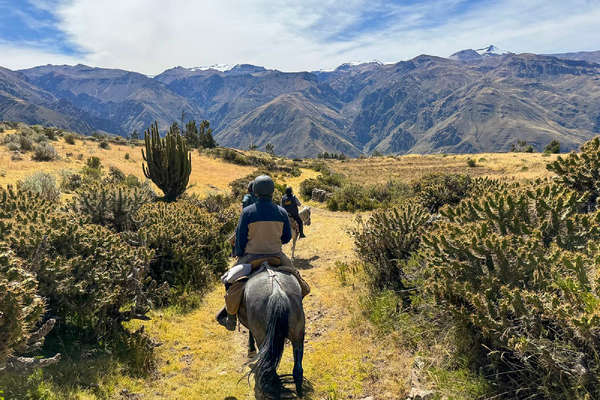
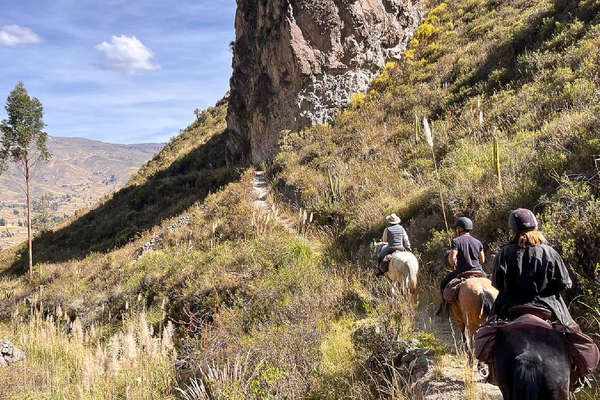
In Pinchollo, Llahuar, Sangalle and San Juan you stay in rustic homestay cottages and must bring your own sleeping bag liner.
You do not need to bring a sleeping bag but a sleeping bag liner is recommended for extra warmth.
Please note that it is possible that on two nights there will be no hot shower - view it as an adventure!
Meals
All meals are provided on the trail as well as drinking water except at restaurants (drinks are not included).
Lunches are picnics and evenings meals are provided by the hotels.
Drinks are at an extra cost when dining out in hotels/restaurants.
Please contact us in advance should you have any dietary requirements or allergies.
Climate
Peru has two seasons - one wet and one dry.
In the heart of the Andes, the wet season runs from October to April, and the dry season from May to September. To make the most of the view and the atmosphere, the dry season is the best time to visit.
In Cusco (3,250m) temperatures can drop to as low as zero celsius in July/August, and as high as 23c in November.
In Arequipa (2,525m) temperatures can drop as low as 6c in July/August and as high as 23c in November. There is very little rainfall in this area.
Generally there are cold nights and mornings because of the altitude, but the days can be sunny and pleasant.
Tips
Tips are not expected but are very welcome. You should tip what you feel is appropriate given the level of service you receive. We recommend c. £5 - £10 per person to be split between your team.
Packing list
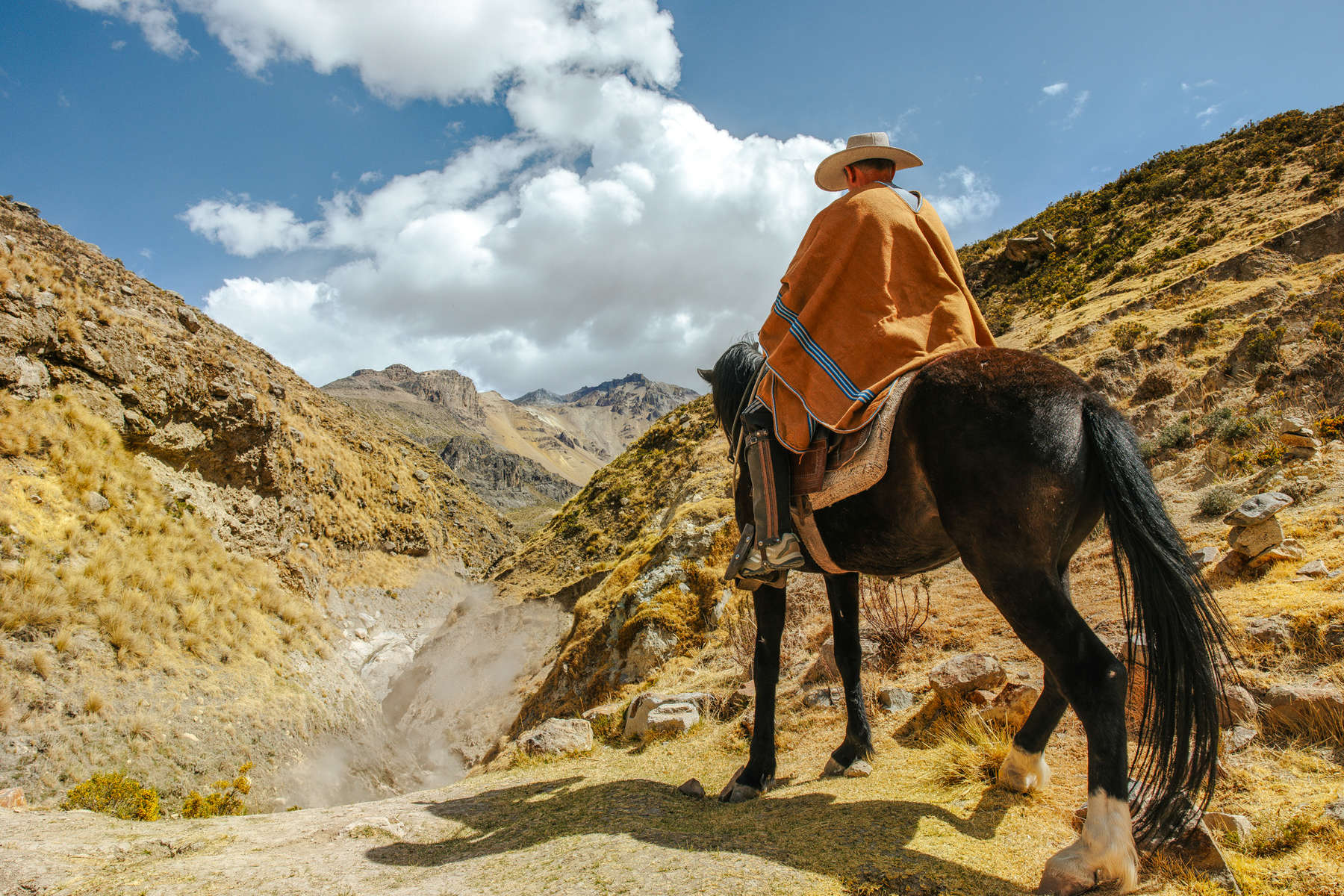
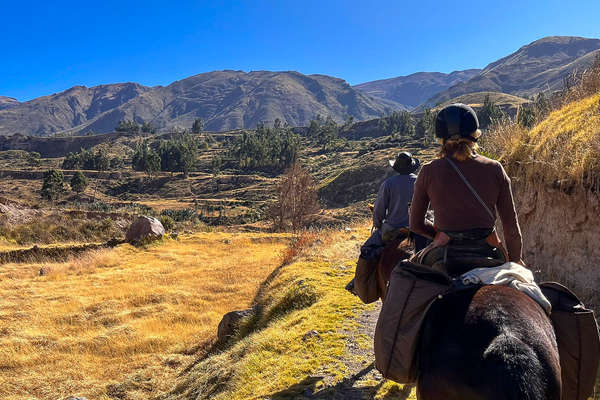
Please note: For nights spent in rustic cabins, you should only pack the bare necessities: please bring a small bag (max 3kg) for your toilet kit and spare clothing. We will tie it behind your saddle; your suitcases and bags will stay at Yanque, no luggage is carried.
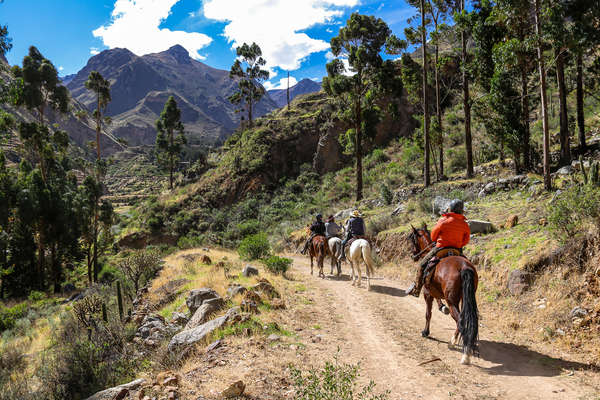
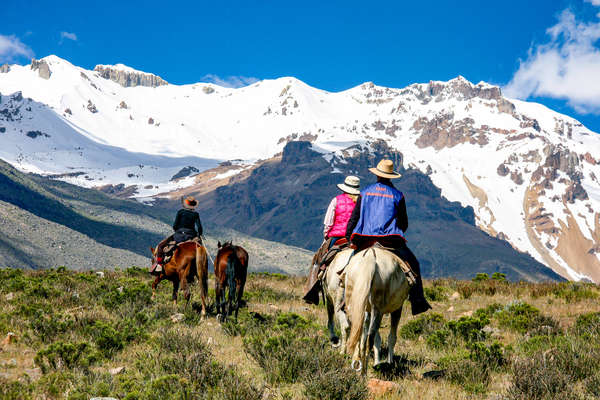
The nights are cold and the days can be warm so please make sure to pack accordingly.
From December to April rain clothing is particularly recommended, although it can rain all year-round.
Head
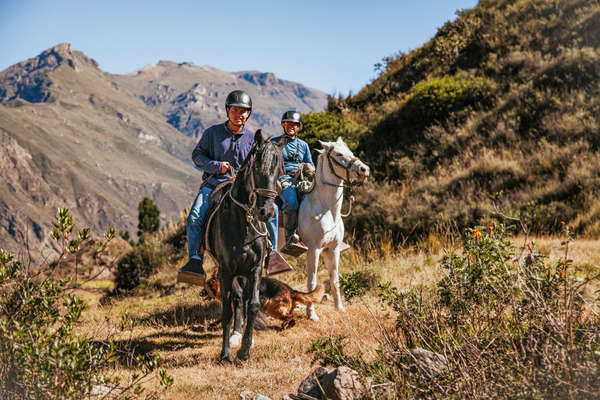
- Equus Journeys strongly recommend that you wear a riding helmet and that you take your own to ensure a correct fit. There are many lightweight options available nowadays
- Sunhat for when not riding
- Sunglasses - with a cord attached so they don't fly off when riding
- Buff or bandana
- Warm hat for cold nights when camping
Upper body
- Thermals (long or short sleeved)
- Long sleeved shirts provide protection from the sun and are an extra layer
- T-shirts
- Lightweight fleece or jumper
- Warm fleece or jumper (and a spare in case one gets wet)
- Warm and waterproof jacket - it can rain at any time of year and the evenings can be particularly cold
Legs
- Lightweight, comfortable riding trousers or jodhpurs - we recommend riding in them at home before taking them on holiday to ensure they don't rub
- Thermals
- Casual trousers for the evenings, such as jeans or tracksuit bottoms
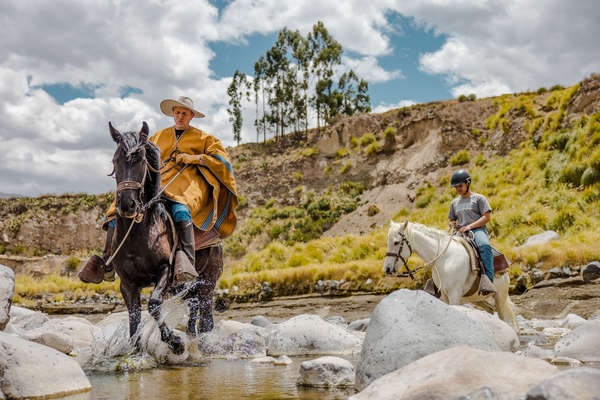
- Waterproof over trousers
- Lightweight, comfortable trousers for non-riding days
Hands and Feet
- Comfortable riding boots. We recommend hiking boots with half chaps but you may wish to take long chaps as an extra layer against inclement weather. We don't recommend taking your favourite long leather boots in case they get damaged. Short riding boots are not recommended as they may not provide enough traction on steep/rocky paths.
- Waterproof shoes/boots can be useful for abundant dew in the mornings or when it rains
- Trainers or equivalent light shoes for moving around the camp in the evenings
- Several pairs of warm, thick socks
- Gloves - your hands are particularly exposed to the sun, cold or rain whilst riding. Waterproof gloves can be particularly useful
Nightwear
- Sleeping bag liner
- Pyjamas or tracksuits or thermals for sleeping in
Our Recommendations
- Please don't take a hard sided suitcase. Your luggage should be soft sided with a capacity of 60-80 litres. We recommend taking a backpack or similar. Remember that you are supported by pack horses/mules for part of the ride so please pack light.
- Backpacks cannot be worn whilst riding. We recommend a small bumbag or a coat with pockets so that you can carry small items with you during the day (camera, sunscreen, lipbalm etc)
- We recommend travelling in your riding boots and carrying your hat and some riding clothes in your hand luggage - then if your luggage goes astray you are still able to ride!
Other useful items
- Swimsuit
- Small backpack for accessing items required during the day (carried by support crew)
- Camera and high capacity memory card. Spare battery
- Bumbag for carrying your camera and small items whilst riding
- Headtorch or small torch for moving around camp at night - bring spare batteries and bulbs
- Water bottle (2 litres or 2 x 1 litre)
- Wet Wipes or equivalent (for when washing facilities aren't available)
- Toilet paper and a lighter to burn it with
- Small plastic bags for rubbish
- Ear plugs (for light sleepers)
In your hold luggage
- Any liquids, such as shampoo, moisturiser, deodorant unless they are less than 100ml and all bottles can fit in a small, clear, plastic ziplock bag. We recommend biodegradable washing products where possible.
- Swiss army knife (or equivalent)
In your hand luggage
- Any valuables, such as your camera, ipod, ipad etc.
- Your riding hat
Medical kit
- Sunscreen and lip balm - should be high factor. This is really important as the sun is really strong!
- Insect repellent, preferably containing deet
- Any medication you regularly take
- Blister plasters in case of any rubs
- Antiseptic cream, plasters, aspirin, anti-histamine, insect-bite salve etc...
- Spare prescription glasses/contact lenses
- Eye drops
- Imodium or similar anti-diarrhoea medication
- Re-hydration sachets
- Water purification tablets
- Antiseptic wipes
- Handwash gel
You may wish to ask your doctor for some specific medication for travelling at High Altitudes. We recommend that you discuss this directly with your doctor who is best placed to advise on your personal medical history.
Miscellaneous
- We recommend taking a copy of your passport and insurance documents with you in case you lose your originals
- Please take your rubbish home with you. There are no recycling facilities in Peru, so take your used batteries, aerosols etc back home and dispose of them appropriately. Try to leave excess packaging material at home before travelling